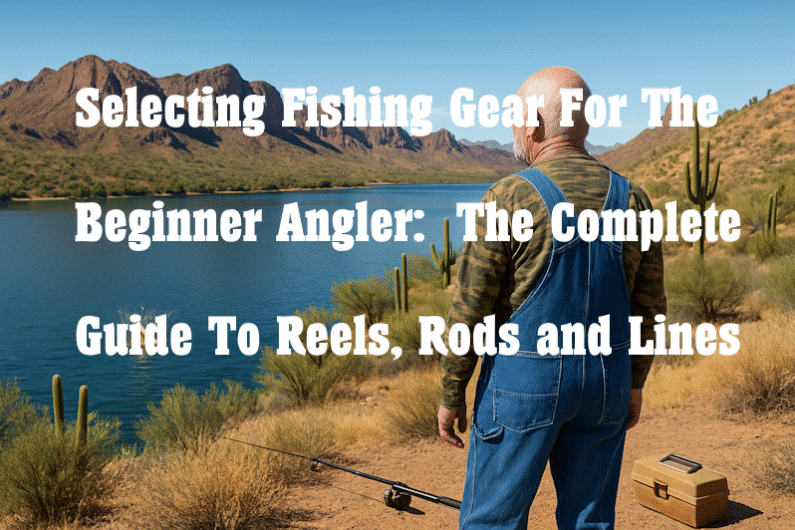
If you’ve reached the golden years and decided it’s high time to swap boring team meetings for bobbers, you’re in good company. Fishing is one of the few hobbies where peace and quiet are actually considered skills, and nobody expects you to sprint, jump, or remember where you left your glasses. Whether you’re newly retired or simply looking for a pastime that doesn’t require getting up from the couch too quickly, freshwater fishing is a perfect blend of relaxation, curiosity, and just enough excitement to make you feel like a kid again—minus the part where you had to ask someone else to put the worm on the hook.
Best of all, getting started isn’t nearly as complicated as assembling that newfangled remote control you pretend to understand. With the right fishing gear for the beginner, and a little guidance, you’ll be casting lines, catching fish, and no doubt telling slightly exaggerated stories in no time. So grab your sun hat, pack a few snacks, something to drink, and let’s embark on a fishing adventure where the goal is simple: enjoy the day, embrace the learning curve, and maybe reel in something worth bragging about at your next family gathering.
Are you ready to go fishing?
Choosing the Right Fishing Gear for the Beginner
Choosing the right fishing gear for the beginner can feel a bit overwhelming—especially when every tackle aisle is packed with options. As an experienced catfish, trout, and bass angler, I can confidently say this: you don’t need a boat, you don’t need expensive gear to start, but you do need the right gear. The right equipment helps you cast more accurately, gain confidence faster, and ultimately catch more fish.
This guide breaks down everything a beginner angler needs to know about spincast reels, spinning reels, baitcasting reels, how to choose a fishing rod, the types of fishing lines, and the differences between ultralight, BFS, and finesse setups. By the end, you’ll know exactly how to put together a reliable beginner fishing combo—without wasting money.
Why Selecting the Right Fishing Gear for the Beginner Matters
The first mistake new anglers usually make is buying equipment that’s too advanced or too specialized. A setup that’s wrong for your skill level can make casting frustrating, cause line tangles, and even turn you off from the sport altogether.
The right fishing gear for the beginner should give you:
- Easy, tangle-free casting
- Comfort and control
- Enough versatility to fish different species
- Room to grow without needing immediate upgrades
Your goal as a beginner should be to buy a combo, or build a balanced setup—rod, reel, and line—that matches the local species you want to target and the way you want to fish.
Before you drive over to your local Walmart or Sportsman Warehouse to buy some fishing gear for the beginner, I suggest going to your State’s Game and Fish website instead. Look up your local lakes, ponds, streams, and the different fish species in them. This can help ensure you make the right choices. With one rod and reel combo, you should be able to catch a variety of fish in any season.
Fishing Gear for the Beginner: Fishing Reels
Fishing reels are the heart of your setup. They determine how smoothly you cast, how well you can control your line, and how much power you have for fighting fish. Let’s explore the three major reel types new anglers encounter.
1. Spincast Reels: The Easiest for Absolute Beginners

Best for: First-time anglers, kids, anyone who wants zero complications. Seriously, its almost impossible to screw up casting with one of these. The Spincast reel is the perfect fishing gear for the beginner.
Difficulty Level: Very Easy
Spincast reels—often recognized by their closed nose cone and push-button design—are the simplest reels on the market. When teaching about fishing gear for the beginner, this is usually the easiest rod and reel to start with. This is what I learned to fish with as a kid.
I have around 20 various rod and reel combinations. 2 of them are spincast combo’s. I have these for guests who need to borrow a rod and reel to go fishing with me. When it comes to fishing gear for the beginner, you can’t go wrong with either the Zebco Omega Pro Spincast Reel and Fishing Rod Combo or the Zebco Roam Spincast Reel and Fishing Rod Combo is an excellent starter combo.
Pros of Spincast Reels
- Push-button casting is incredibly intuitive
- Minimal tangles or line twists
- Affordable and durable
- Great for fishing small ponds, bluegill, trout, and bass
Cons of Spincast Reels
- Limited casting distance
- Less accurate than spinning or baitcasting reels
- Not ideal for larger fish
- You’ll eventually outgrow them
Verdict for beginners:
If you’re nervous about learning to cast or want the absolute easiest entry point fishing gear for the beginner, or a great “back-up” combo, a spincast reel is your friend. But if you’re looking to gain long-term fishing experience, consider starting with a spinning reel.
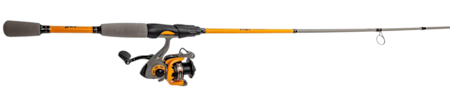
2. Spinning Reels: The Best All-Around Choice for Beginner Anglers
Best for: Most beginner anglers
Difficulty Level: Easy-Moderate
When anglers ask me which reel to start with, the spinning reel is almost always my top recommendation. It’s versatile, relatively easy to learn, and capable of handling everything from panfish to pike.
Half of my rod and reel inventory is comprised of spinning reels. They are not that difficult to learn how to cast with. They are accurate once you have mastered your casting. This are probably the most versatile reel you can own. From ultralight to heavy, and you can use this reel for bluegills, crappie, trout, pike, bass and catfish. I have ultralight reels for trout and crappie, finesse and mediums for bass, and heavy spinning reels for catfishing. As much as I love and appreciate my baitcast reel, hands down, the spinning reel is my fishing workhorse.
Pros of Spinning Reels
- Great casting distance and accuracy
- Handles lightweight lures well
- Easy to maintain
- Works with a wide range of lines and rod types
- Perfect for finesse fishing styles
Cons of Spinning Reels
- Can create line twist if spooled improperly
- Slight learning curve compared to spincast
- Not ideal for heavy lures or power techniques
Verdict for beginners:
If you want one setup to do everything, choose a spinning reel in size 2000–2500 (medium action) for most freshwater fishing.
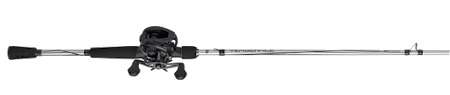
3. Baitcasting Reels: The Power and Precision Option
Best for: Growing anglers with some casting experience
Difficulty Level: Moderate-Hard
Baitcasting reels offer unparalleled control and power—but they require practice. If you’ve ever seen a professional bass angler, you’ve probably seen them using a baitcaster. Let’s not kid around, using a baitcast reel requires PRACTICE. What happens to the “novice” and even experienced baitcast users is this reel needs to be adjusted in order to prevent backlash and turning it into a rats nest of fishing line. Backlash is when your reels spool is turning faster than your line is flying through the air when casting.
To prevent backlash from happening, you have to adjust your brake and spool tension knob. I learned this years ago watching some 8 or 9 year old kid’s YouTube video. Had I not, I wouldn’t be owning any baitcast reels. I have spent a few hours in a cul-de-sac learning how to cast trying to hit a 5 gallon bucket. This reel takes some skill to master.
Pros of Baitcasting Reels
- Superior accuracy with practice
- Excellent for heavy lures (jigs, crankbaits, swimbaits)
- Strong drag systems for big fish
- Great line capacity
Cons of Baitcasting Reels
- Backlashes (“bird’s nests”) happen while learning
- Not ideal for ultralight lures
- More expensive and maintenance-heavy
- Requires the right rod pairing
Verdict for beginners:
Beginners can learn baitcasters, but I recommend starting with spincast or spinning gear unless you have hands-on help or plan to target bass specifically.
For a beginner, your best reel option will be a medium spincast or a spinning reel. Both are easy to learn and use, tho the spinning reel will offer you the most versatility.
Birdwatching for Seniors: 11 Ultimate Birding Tips to Inspire Seniors
Fishing Gear for the Beginner: Fishing Rods
Your fishing rod works together with your reel. A poorly matched rod and reel can cause bad casting, line breaks, or difficulty setting the hook. I like to pair up my reels with Cadence Rods. Whatever your fishing needs are, they have the right fishing rod just for you.
Here’s what to look for when choosing your first rod.
Rod Length: What Size Should a Beginner Start With?
- 6’6″ to 7′ is ideal
- Shorter rods = more accuracy, less distance
- Longer rods = more distance, less control for beginners
A 6’6″ spinning rod is the perfect starting point for most freshwater applications.
Rod Power: Ultralight to Heavy
Rod “power” refers to how much force it takes to bend the rod.
- Ultralight: Panfish, small trout
- Light: Trout, small bass
- Medium-Light: Finesse bass fishing
- Medium: Most versatile for beginners (bass, trout, catfish)
- Medium-Heavy: Larger bass, pike, big lures
- Heavy: Big catfish, musky, large swimbaits
Best beginner choice: Medium power, Fast action
Rod Action: Fast vs. Medium vs. Slow
Rod “action” describes where the rod bends.
- Fast: Bends near the tip — great sensitivity
- Medium: Bends in the top half — great for crankbaits
- Slow: Deep bend — great for live bait
Beginners benefit most from a Fast action rod because it offers better hook-setting and sensitivity.
Using the right fishing rod will affect everything from your hook set, casting distance, to your casting accuracy. You want that lure to hit the spot you’re casting at right? Maybe you need a specific rod like a heavy flippin’ & pitchin’ stick to work reeds and lily pads. Trust me, having the right rod matched to your reel matters. Do your due diligence and research to find the right fishing gear for the beginner suitable for your needs.
Fishing Gear for the Beginner: Fishing Lines
Your fishing line does more than hold the hook—it affects casting distance, lure control, and sensitivity. Let’s talk about the three major types of fishing line you’ll find on any store shelf. Almost every rod and reel combo you will buy will come with monofilament line on it. Depending on my rod & reel combo each has some type of SpiderWire line on it. SpiderWire is a thinner line and it allows me to have a few more feet of line on my reel’s spool.
Let’s break down the three major types of line you can use.
1. Monofilament Line (Mono)
I previously mentioned at the beginning of this article that I have almost 20 rod and reel combos. The reason why, is each rod and reel has a specific purpose. Any combo I have with monofilament line is tailored for top water action using floating lures like a hula popper or an artificial frog.
Best for beginners because it is:
- Cheap
- Flexible
- Easy to tie
- Forgiving with knots
Mono floats slightly, making it ideal for topwater lures.
Recommended strength:
- 6–10 lb for most freshwater fishing
2. Fluorocarbon Line
Flourocarbon is my “go-to” line for most of my fishing line needs. Most of what I’m casting is either a worm jig, swim-bait, drop-shot, or a crank-bait for bass, or I’m tossing some powerbait on a #10 treble hook off the bottom for trout. The majority of my reels have fluorocarbon line on them.
Best for: Clear water, finesse tactics
Why: Nearly invisible underwater
Pros:
- It sinks
- Great sensitivity
- Abrasion resistant
Cons:
- Stiffer and harder to handle than mono
- More expensive
Beginners can use fluorocarbon as a leader tied to braid or mono.
3. Braided Line (Braid)
Yeah. I run braided line on my heavy baitcast “pitchin’ and flippin” stick. Braided line is what you need when you’re bass fishing working on a heavy vegetation patch with reeds and lily pads, lots of underwater log or stick structures, and for catfishing. This is the type of line you use when you don’t want to break your fishing line.
Best for: Heavy cover, long casts, experienced anglers
Pros:
- Tremendous strength
- No stretch = excellent sensitivity
- Long life
Cons:
- Very visible in water
- Can cause wind knots for beginners
- Requires a mono/fluoro leader in clear water
- It can be abrasive and wear through your rods ferrules over time.
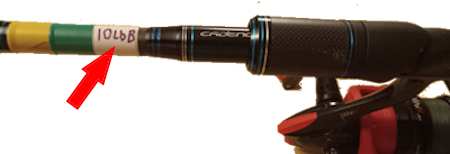
Beginners should start with mono, then advance to braid as confidence grows. As I have a multitude of fishing reels to keep track of, I use white colored tape, wrap it around my rod, and with a sharpie, I’ll mark it with the line weight and type. “B” for braided, “F” for fluorocarbon, or “M” for monofilament.
Not only do you need to choose the right fishing line, but your line weight choice is also important. Proper fishing line weight is one of the simplest ways to improve your success on the water. The “pound test”—often written as 4 lb, 8 lb, 12 lb, etc.—refers to the amount of force the line can withstand before breaking. Using the right line weight ensures you can cast properly, present your lure naturally, and still have enough strength to land your target fish
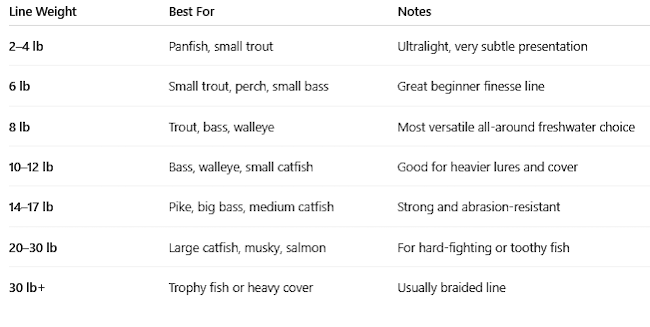
Make sure your line weight matches the rod and reel size of your gear. And one last thing about fishing line. I change mine at least once a year. Here in Arizona it gets hot. Typically hotter in the trunk of the car or in the bed of a truck if you store our rod and reel in there. That heat can affect your line, making it brittle. So before winter here, when I trout fish, I make sure I put new line on my trout reels. And in the spring when I start fishing for bass and catfish, you got it, new line goes on those reels. I hate to lose a fish because my line snaps.
I always replace the line on a new reel I buy if it comes with line on it. This way I know exactly what I have and I know it’s new line. It’s up to you, if you decide to do this.
Ultralight vs. BFS vs. Finesse Gear: What’s the Heck Are You Talking About?
Anglers often use these terms interchangeably, but what we’re talking about here is specialty gear. Understanding the differences helps you choose a setup that fits your goals, should you want a more specific fishing experience.
Ultralight Fishing: Perfect for Small Species and Small Waters
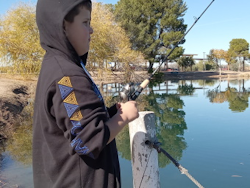
As you can see, my grand-nephew is fishing with his Zebco 33 Cork Reel and Fishing Rod Combo for trout at our local urban lake. This is a fantastic fishing gear for the beginner rod and reel combination. I recommend this combo for any beginner looking to try & use ultralight gear.
As for myself, my favorite fishing is trout fishing with ultralight gear. I have a couple of ultralight reels on 6.5-foot-long light rods. They’re super sensitive to nibbles when trout peck at my powerbait. And I have a ultralight crappie rig on a 9′ rod to change things up.
Definition:
Using very light rods, small lures (1/16–1/8 oz), and light line (2–6 lb).
Best for:
- Trout
- Panfish
- Small bass
- Streams and ponds
Why beginners love it:
Ultralights are a great fishing gear for the beginner fishing rigs. This gear is fun, easy to cast, and makes small fish feel huge. I’ll say this. For all the tackle I have, my all-time favorite is fishing for trout using ultralight tackle.
Finesse Fishing: A Technique, Not a Gear Category
“Finesse” refers to light-line, subtle fishing techniques, usually for pressured or clear water. Yeah, the bass guy’s got jealous of the trout guy’s ultralight gear, so they made up finesse fishing. Finesse fishing is pretty much the same as Ultralight fishing with just a bit slightly heavier tackle and more focused on bass.
Finesse often uses:
- Spinning reels
- Light to medium-light rods
- Light line (4–8 lb)
- Compact, natural-looking lures
Examples:
- Ned rigs
- Drop shots
- Wacky rigs
- Small swimbaits
Beginners benefit from finesse fishing because it’s forgiving and consistently catches fish. So if you’re looking for bass fishing gear for the beginner to try your hand at finesse fishing, this is a great system to have.
BFS (Bait Finesse System): Ultralight Baitcasting
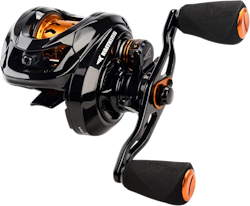
BFS originated in Japan and refers to using baitcasting gear for ultralight lures. Again, the bass crowd wanted ultralight baitcaster tech, and the BFS tech grew out of this desire. BFS isn’t exactly “fishing gear for the beginner” friendly.
I use a KastKing Zephyr Bait Finesse Baitcasting Reel for my BFS setup. and it’s paired up with a Cadence Rod.
Key features:
- Specialized shallow spool baitcasters
- Ultralight or light casting rods
- Light line (4–8 lb)
- Designed for casting tiny lures on baitcasters
Why it’s not ideal fishing gear for the beginner:
BFS requires precise thumb control and reel tuning. It’s amazing once you’re skilled, but not the best starting point.
What Fishing Gear Should a Beginner Buy? (Simple Checklist)
It’s easy to walk into a WalMart or Bass Pro Shops and buy any fishing gear for the beginner. But do take to time to research in order to get the most value for your money.
Here’s a balanced setup that works for 95% of new freshwater anglers:
Rod
- 6’6”–7’ Medium Power
- Fast Action
- Spinning rod
Reel
- Spinning reel size 2000–2500
Line
- 8 lb monofilament
Lures
- Inline spinners
- Soft plastics (worms, small swimbaits)
- Jigs
- Small crankbaits
This setup allows beginners to fish:
- Bass
- Trout
- Panfish
- Catfish (smaller varieties)
Without complications.
Final Tips for Beginner Anglers Choosing Gear
Whatever you choose to learn with, I recommend having at least 2 rod and reel combinations. Why you ask? That’s easy. The first reason it gives you a spare in case something happens. Me and two buds took off one day on a 2-hour drive to fish at a great spot here in Arizona on the White Mountian Apache reservation.
One of them brought a single rod and reel with him. As he was heading over to the bank, he tripped, stumbled, and stepped on his fishing rod snapping it in half. Fortunately we had brought spare rod and reel combo’s along, and he was able to fish. Had we not, he would have spent all day watching us fish.
In another incident, this same guy on a different trip to a local urban lake, was bragging about his new crappie rod and reel he got. We fished for a bit and, he eventually hooked a nice fish with his new light crappie combo. We both assumed he had hooked a big catfish as his rod was literally bent in half due to the fish fighting him.
As he was reeling the fish in, his rod suddenly snapped and we watched the broken half slide down his line into the water. He managed to reel in the catfish, and darned if that “big” catfish wasn’t 8 inches long at best. It goes to show that even a little catfish fights darned hard, and using light gear may not be your best choice for catfishing.
Secondly, some States allow you to have two poles in the water. This is handy when you’re trout or catfishing using stationary baits on the bottom or fishing with bobbers.
It’s simple, fishing gear for the beginner means buying what you can afford and keeping it simple. There is a lot of fishing gear out there, and you can upgrade your gear as you gain more experience. What matters most is to HAVE FUN AND ENJOY YOURSELF!
✔ Stick to one main setup at first
Avoid buying multiple rods and reels until you master one.
✔ Don’t overspend
$50–$100 is enough for a quality beginner rod and reel combo.
✔ Choose gear based on your local waters
Small ponds = ultralight
Lakes = medium spinning
Bass-heavy waters = medium-heavy or baitcaster (once practiced)
✔ Keep your gear simple
Complicated rigs cause frustration for beginners. Use the K.I.S.S. method. The Navy taught me to “Keep It Simple Stupid” and you don’t need to make buying a fishing rod and reel any more complicated than necessary.
Best Fishing Gear for the Beginner Advice: Start Simple, Learn Smart, Catch More Fish
Choosing the right fishing gear as a beginner doesn’t have to be difficult—start with a reliable spinning setup, learn the basics, and build your skills from there. Understanding the differences between reel types, rod powers, fishing lines, and specialty setups like ultralight, BFS, and finesse will help you make smarter decisions and improve your success on the water.
Fishing rewards patience, practice, and curiosity. With the right fishing gear for the beginner in hand, you’re already halfway to becoming a confident angler.
Want more practical, experience-backed articles like this? Subscribe to our newsletter today and get expert senior-focused tips, strategies, website updates, and announcements delivered straight to your inbox.