If you’re brand new to fishing—or maybe you fished a little years ago and now you’re ready to get back into it—then building your first tackle box can feel a bit like stepping into a hardware store without a shopping list. Hooks, sinkers, floats, swivels, lures… the options seem endless. But here’s the truth every seasoned angler eventually learns: you don’t need a mountain of gear to catch fish. You just need the right tackle box for the beginner basics.
As someone who has spent decades on lakes, rivers, ponds, and coastline piers, I’ve seen beginners weighed down by too much tackle and too little know-how. That’s why I’m here to help you start strong—especially if you’re a retiree looking for a relaxing, rewarding hobby that gets you outdoors without adding unnecessary complexity.
In this guide, we’ll walk step-by-step through exactly what a tackle box for the beginner should contain, why you need each piece, and how to use it confidently on your first few outings. Think of this as having a friendly, patient fishing buddy sitting beside you, sharing real-world wisdom from years on the water.
Why a Simple Tackle Box Is the Best Tackle Box for the Beginner
Let’s start with something important: Fishing is supposed to be enjoyable—not overwhelming.
A good beginner tackle box should:
- Keep things simple.
- Cover all or at least most of your fishing essentials.
- It needs to be easy to organize.
- It should support multiple fishing situations and environments.
- Give you confidence on the water.
A well-designed tackle box for the beginner becomes both your classroom and your trusty companion. It holds the tools you’ll learn with, rely on, and eventually upgrade as you discover your personal fishing style.
There is something else to think about here. Your research may lead you to consider starting out with more than one tackle box. It may be easier for you to have specialized tackle boxes like a “worm” bag for soft artificial baits or a tackle box specifically for catfishing. I have tackle bags and boxes for: catfish only, a small bag that holds just my trout powerbaits, a tackle backpack for my finesse tackle, a soft artificial “worm” bag for bass, a panfish/trout/crappie tackle box, and a tackle bag that holds all my bass hard baits.
I even have a small soft tackle bag for keeping my terminal gear. As you may of observed, I like to organize my fishing tackle by species. This works best for me as ORGANIZATION is my thing, but you should choose a method that storage works best for you.
3 Best Tips For Selecting The Pefect Fishing Gear for the Beginner Angler
Choosing the Right Tackle Box for the Beginner
Before filling it, you need to choose the box or bag itself. This decision is surprisingly important because it sets the tone for your fishing setup. You want something that fits an immediate need, but you might expand your gear within a short time. So find something a little bit bigger than your initial thoughts.
- Do you plan on fishing one or two times a year?
- Do you plan on fishing multiple times a year?
- What kind of fish am I planning on fishing for?
- What kind of fishing will I be doing? Top water, bottom fishing?
Hard Tackle Box vs. Soft Tackle Bag
You’ll generally find two types:
Hard Plastic Tackle Boxes
These are the traditional fold-out trays many anglers grew up with.
- Durable
- Easy to clean
- Great organization
- Heavier, bulkier
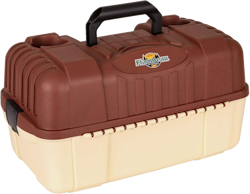
A hard tackle box is perfect if you want something structured and long-lasting. I use the Flambeau 7-Tray Fishing Tackle Box for my trout and crappie tackle box. It measures and 20″x12″x10.75″ and keeps all my gear organized, specifically for those fish. I also have a small hard tackle box I keep all my catfish tackle in, and I have a Plano Bait Stowaway hard box that I store my hanging spinner-baits in. You don’t need a box specifically for these, but once you have, say a dozen or more of these style baits, you can see where this kinda of tackle box would come in handy, keeping these lures organized and un-tangled.
Soft Tackle Bags
Newer and more flexible, designed like small duffel bags.
- Lightweight
- Expandable
- Lots of outside pockets
- Requires small plastic boxes for organizing lures and hooks
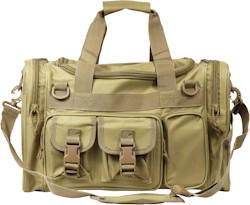
Both hard of soft work beautifully for a tackle box for the beginner, but I usually recommend a large-sized soft tackle bag because as a retiree I prefer the lighter weight. For me, a large sized bag works best like my 9 Compartment Large Fishing Tackle Bag. This bag measures 18″x12″x11″ and I find it perfect for carrying all my bass hard baits. If they are too big, it’s difficult to move these bags around your feet on a boat or carry around a lake.
And if you’re anything like me, you’re not just carrying a tackle bag and a couple of fishing rods, I also lug along a tote or cooler with drinks and snacks, and a collapsible camping chair. It can add up so you might want to think about a carrying all this in a Collapsible Folding Wagon.
Small Storage Containers
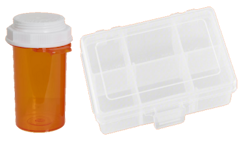
Yeah, it seems like you can never have enough of these, and the longer you fish, the more you will collect to use in your tackle boxes and bags. You can get these, like the Plano containers direct from Amazon, or they come as storage containers with various hardware and fishing items. When you use these items up, keep the containers and use them for your tackle needs.
The Must-Have Essentials for a Tackle Box for the Beginner
Now let’s get into what truly matters—the gear inside the box. These are the items you’ll reach for every time you fish.
Hooks
Hooks are the backbone of your fishing setup. If you’re not sure which type of hook you should be using, go to YouTube and watch what the local guys and gals there are using to catch the species you’re interested in. There are so many different hook styles and types, plus sizes available its impossible to say which ones you need to be using. One thing is for sure, every beginner should carry a mix of hooks to cover the basics:
- Size 6–10 Aberdeen hooks for panfish
- Size 1–2 baitholder hooks for bass and trout. I like the gold #10 and #12 size snelled hooks for trout. For bass I carry a mix of Wide Gap Hooks, EWG Hooks, Neko Hooks, and Drop-shot hooks in different sizes for my rubber worms and lizards.
- Size 1/0–5/0 circle hooks for catfish. Yeah for catfishing, my go-to hooks are the Baitsaver Circle Hooks. You can’t go wrong with these. I use the 1/0, 3/0, 5/0 sizes. And no matter what baits I put on these, it stay’s on the hook.
And don’t forget. Store your hooks in small plastic organizers to keep them sorted by type and size. Trust me—hooks multiply when loose.
Sinkers
Sinkers help your bait sink to the right depth. I have them in all sizes, styles, and weights.
The easiest sinkers to start with are split-shot. My next most numerous sinkers are a mix of lead or tungsten “bullet” or “egg” shaped sliding sinkers. These are used with my worm and Colorado style rigs. The last style is the “pyramid” or “bell” shaped sinkers. You tie these on the end of your line, and your hook is set in your line above your hook several inches.
Start with a mixed container of split-shot, and add a few egg or bullet weights, and you’re off to a great start. Another tip, when storing your sinkers, you can use your old prescription bottles, just peel and scrape the labels off. These make perfect for storage containers for your sinkers or other terminal tackle.
Bobbers or Floats
A bobber is both a fish detector and a visual anchor for your bait’s depth. Typically you get them in two colors like the classic red-and-white round or yellow and green bobbers. Why two colors? It depends on your light and glare conditions out on the water. Depending on which side is up (the white or the red foreexample) you bobber can be almost invisible floating out on the water. So adjust as necessary.
There are two types of bobbers. The classic round style and then we have slip bobbers
Round Bobbers: The classic round bobber is the traditional, iconic fishing float most people picture when they think of beginner fishing gear. It’s usually the red-and-white round bobber that clips onto your fishing line and keeps your bait suspended at a specific depth below the surface. It’s simple, easy to use, and perfect for beginners—especially if you grew up seeing parents or grandparents using the same style. You clip it onto your line, and it stays fixed in place. It’s simple, if you clip it 2 feet above your hook, your bait stays 2 feet below the surface.
Slip Bobbers: A slip bobber is a special type of fishing float that slides freely up and down your fishing line, letting you easily adjust the depth of your bait—anywhere from just below the surface to many feet deep—without changing your entire setup. Think of it as a depth-control tool that gives you far more flexibility than a traditional fixed bobber. It works by allowing your fishing line to pass right through it. Instead of being clipped in one place like a round red-and-white bobber, a slip bobber moves on your line until it hits a small stopper.
A bobbers job is two-fold. #1: It Holds Your Bait at a Set Depth and #2: It Tells You When You’re Getting a Bite by a Wiggle, Dipping, Moving sideways or by going completely underwater.
If you want the easiest option, start with round bobbers until you’re comfortable adjusting depths.
Tackle Box for the Beginner: Basic Lures
While live bait is aways beginner-friendly, a simple mix of lures expands your fishing skills. Now this section is literally “opening a can of worms” There are some many types of lures and artificial colors, that we can’t begin to cover them all. So before we get too deep on the Baits topic, we’ll talk a bit about water conditions and “match the hatch” as these will have a great effect on what you buy and use.
So water conditions and color matter. This affects the color baits you’re going to use in your local ponds, lakes, and streams. What is boiled down too, depending on your water condition, can the fish SEE YOUR BAIT? Check out the generic chart below:
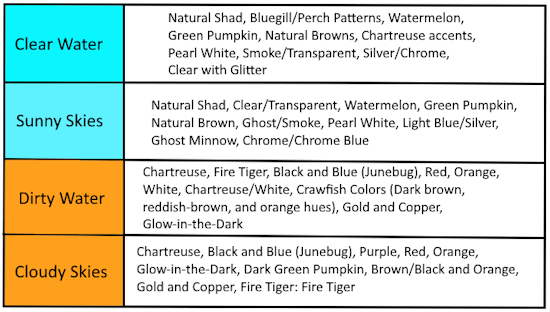
This chart will help you choose the best color baits for your water conditions.

Next is “match the hatch”. What do I mean by “match the hatch”? It simply means your purchase decision should be based on what are the natural colors and patterns of the food sources in your local waters. Choosing the right color and patterns will improve your success rate when it comes to catching fish.
Hard Body Lures
Hard lures are designed to imitate baitfish, insects, or distressed prey, and they trigger instinctive strikes from species like bass, trout, walleye, crappie, and pike.
Hard bait types are : Crankbaits, Jerkbaits, Topwater Lures, Spinnerbaits, and Lipless Crankbaits. You cast these out and retrieve them. Your retrieval style (we’ll call it a “cadence”) determines how the lure acts in the water. The cadence when reeling in a lure refers to the speed, rhythm, and style of your retrieve—basically, how you bring the lure back to you. Cadence is one of the most important parts of lure fishing because it determines how your lure behaves in the water and whether it looks like something a fish wants to eat. Most strikes happen not because of the lure itself, but because of the cadence you use.
Think of cadence as:
- Fast or slow
- Smooth or jerky
- Consistent or erratic
- Long pauses or short pauses
Spinners and Spoons
Excellent for trout, bass, and panfish.
Reliable brands: Panther Martin, Mepps, Rooster Tail.
Soft Plastic Worms and Creature Baits
Useful everywhere.
Colors: green pumpkin, black, white
Jigs
A 1/8 oz jig works across species and is nearly fool-proof. When it comes to jigs, there are many types to pick from, so do your research and buy what you need once you have made decisions.
Live Bait Supplies
Live worms? This includes cricket, grasshoppers, beetles, grubs, meal worms and minnows. Man, you can’t find a better bait anywhere. I’m not saying fish will hit a live worm or cricket all the time, but anytime you go to a lake, you should bring a tub of live worms or other live baits along! If you’re using worms or minnows. There is always a day where live bait becomes your go-to choice.
Also check your local Fish and Game regulations on using live baits. There may be restrictions in place.
Considier storing your live baits with a 2Pcs Live Bait Steel Worm Storage Box, or for minnows & bait fish, a Frabill Bucket aeretor container
- Small bait container
- Bait hooks
- A few spare zip-top bags
Terminal Tackle
Terminal tackle refers to all the small, essential pieces of fishing gear that attach to the end of your fishing line—the “terminal end.” These items directly assist you in presenting bait or lures, securing your rig, and ultimately catching fish.
Think of terminal tackle as the nuts and bolts of your fishing setup. Without it, even the best rod and reel won’t do much for you.
I mentioned early in the article that I have a small terminal tackle bag. Whatever fish I target or season, I take this terminal bag along with my other tackle boxes and bags. It holds all my terminal tackle and other fishing tools like scissors, clippers, knot-tying tools, and some basic fishing rod and reel repair items.
Swivels
Prevent your line from twisting—especially useful with spinning tackle or lures that rotate, and allow easy connection between line and leader. Having these in a variety of sizes in your tackle box is a fishing essential.
Snaps and Snap Swivels
Snaps let you change lures quickly without cutting your line. Having these in a variety of sizes in your tackle box is a fishing essential.
Leaders or Snelled Hooks
Short lengths of stronger or more abrasion-resistant line used near the hook. You can usually buy these in a 6-pack of snelled hooks, or make your own. I get the eagle #10 or #12 gold snelled hook for trout, and for catfish, I’ll make my own with 25lb or 30lb braided or fluorocarbon line. I’ll whip up a few about 18-24″ long and store each individually in a small ziplock bag.
Split Rings
This is another item to have lots of, and in several sizes. They come in handr making up various fishing rigs and for attaching to lures. If you have some, you will use thjem.
Line Clippers
You don’t want to bite your line (trust me—hooks and teeth don’t mix). Be sure to carry nail clippers or dedicated line scissors. As a matter of fact, carry 2 clippers in case you lose one.
Long-Nose Pliers
Having a set of long-nose pliers is a must-have in every tackle box for the beginner. These come in handy for removing hooks, crimping split-shot sinkers, or cutting or shaping wire or a hook. Another useful pair of pliers to have is a set Strike King split-ring pliers just for working with split-rings.
Measuring Tape and Scale
I practice catch and release, but I still want to measue and weight my fish I catch. Carry a tape measure along. If you want to weigh your fish, I recommend the KastKing Fish Scale. It comes with a built-in 38″ scale and includes a fish gripper to help hold your fish. This is a win-win tool
Extra Fishing Line
Carrying along a small spool or two of fishing line can make or break a fishing trip. You might need to replace your line on a reel or maybe you need some to make a leader with. Carry a spool each of monofilament and one of fluorocarbon. 8-10lb test. This’ll cover almost all of your basic fishing needs and you won’t wind up with the short end of a stick on your fishing trip
Additional Gear
These items should augment your tackle box for the beginner.
Rain Gear
I live in Arizona, and even out here in the American Southwestern desert I carry rain gear. I keep a set in my truck or carry it on the boat as part of my fishing gear. It’ll keep you dry during inclement weather and while we are on this topic, you should also carry a couple of space blankets with you for emergency use.
Emergency Kit
So maybe you forego your next urban lake fishing adventure for something out in the wild. A day trip up to a mountain lake or a 2-3 day camping trip alongside a river for some trout fishing can turn into a nightmare if your not prepared. Make sure you pack plenty of fire starting tools, spare dry clothes, spare batteries, water filtration kits, extra sleeping bag or blankets, tarps, axe and saw, headlamps, knife, etc. Whatever emergency comes along, let’s hope you can endure it with some level comfort until you can evacuate the area or rescue arrives. BE PREPARRED!
Small First-Aid Kit
Always carry a first aid kit. Nothing too fancy, we’re talking just basic stuff here. A small kit is all you really need. it should include: a variety of bandages, alcohol and antiseptic wipes, tweezers, some gauze, a roll of surgical tape, aspirin or any over-the-counter pain & inflammation relievers, small set of scissors and sunscreen. Always pack along sunscreen
Dont forget to pack along any prescription meds you use. Your day at the lake might turn into a overnite stay for any number of reasons. Safety First!
Fishing is peaceful—until a hook decides to nip your finger.
How to Organize a Tackle Box for the Beginner
Good organization prevents frustration on the water—especially for retirees who want stress-free fishing. Organizing your tackle box is your thing, for your preferences. The suggestion below is just a guideline
Top Tray or Front Pockets
Use for:
- Hooks
- Sinkers
- Bobbers
- Swivels
These are the things you reach for constantly.
Middle Sections
Perfect for:
- Lures
- Soft plastics
- Jigs
Keep them in small labeled containers if needed.
Bottom Compartment
Store larger items:
- Pliers
- Line spools
- First aid
- Measuring tape
- Towel
With a well-organized tackle box for the beginner, you won’t waste time fumbling—you’ll be fishing.
Setting Up Your Line: Simple Knots for Beginners
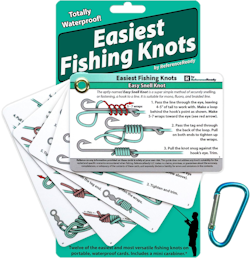
Any tackle box for the beginner or seasoned pro is only as useful as your ability to tie a knot that holds. Fishing knots are absolutely essential—far more important than most beginners realize. Even with the best rod, reel, and tackle, a poorly tied knot will cost you fish, lures, and confidence. But a good knot? It’s the backbone of your entire setup.
As an experienced angler, I can tell you this: Your knot is the only thing connecting you to the fish. A strong, properly tied knot often matters more than expensive gear. Bad knots will cause you to loose fish!
The most common and useful fishing knots for beginners are the Improved Clinch Knot, Palomar Knot, Non-slip Loop Knot, and the Snell Knot. Learn to tie these 4 first, then you can advance to more complex knots.
Practice at home with a thick rope until your hands feel confident. And if you’re a bit forgetful, no matter, pick up a handy small pocket guide like the The Pocket Guide to Essential Knots that will fit in your tackle box for the beginner, or get a clip-on set of waterproof credit card-sized knot cards that you can clip on the outside of a tackle bag. I carry both with me.
What Species Should the Beginner Target?
To build confidence quickly, target fish that bite often. Your tackle box for the beginner should reflect those choices. Panfish are pretty darned aggressive fish. They eat almost anything. I’ve known them to hit pieces of a cigarette butt, a small gold salmon egg hook, pieces of bread, bits of crickets, etc. You want to catch easy fish or keep the grand kid amused, turn ’em loose on bluegills. These are the easiest of fish and require the least amount of tackle to be successful.
Crappie are bit more complicated, but you can hook these fish easily with trout gear like spinners and jigs
Panfish (Bluegill, Sunfish, Crappie)
Best for beginners:
- Easy to catch
- Bite throughout the day
- Found in nearly every pond
Use worms or a soft bread ball, small jigs, or bobber rigs.
Trout
Great for retirees who enjoy quiet lakes and streams. Trout are easy to catch. I prefer a colorado or slip rig using #10 or #12 snelled hooks with a 1/2″ size ball of Berkley PowerBait Dough. Just enough to cover up the hook in a tiny ball. The powerbait floats, so it’ll come up off the bottom a couple of inches and trout will find it.
- Spinners: Okay, with spinners, nothing catches trout like a Rooster Tail or a Blue Fix spinner. These work well in Pike too.
- Dough bait: I recommend having a variety of colors and color mixes of these as trout can be finicky. I love using Berkley PowerBait.
- Worms: Real worms or artificial worms work well.
Bass
A bit more challenging but incredibly rewarding. Bass fish has so many options, but its definitely has the most fishing options when it comes to equipping a tackle box for the beginner for bass fishing.
- Plastic worms (creatures): The most popular rigs for artificial worms are the Drop shot rig, Texas rig, Colorado rig, Neko rig or a Tokyo rig. These all catch bass. By the way, by creatures, I mean soft baits like artificial lizards, crawfish, insects, small amphibians (frogs) , and even strange shapes that don’t look like anything natural but can still trigger big strikes.
- Spinnerbaits and Buzzbaits: These are great options. I love a Booyah Chartreuse Buzz Buzzbait when I use these for bass. I have both large sizes and small BFS/Finesse sizes.
- Jigs: These are great for bumping along the bottom for catching bass. If you’re in the market for some jigs, you have a lot of options to choose from. Use your jig with artificial worms, lizards, and craws and choose colors that “match the hatch” in your local lakes.
- Hard baits: Oh yeah.. now we’re talking lures like Crankbaits, Jerkbaits, Topwater Lures, Spinnerbaits, and Lipless Crankbaits. These baits cover the entire water depth spectrum. When you pick these out, be sure to choose colors that “match the hatch” in your local lakes
Catfish
Relaxing and perfect for evening fishing. Catfishing is probably the easiest of all the fish species to catch. Especially Channel Cats. All you need is a medium to heavy rod and reel combo, a heavy egg style sinker and a 1/0 to 5/0 circle hook. Set it up as a Colorado or Slip Rig, and you can use a variety of stink baits like chicken livers to raw chicken chunks marinated with a pack of cherry or strawberry koolaid powder. Toss it out, and settle into your chair and wait for it to get hit.
And know your catfish species. Fishing for flatheads is way different from fishing for channel cats. Your local Game and Fish website is your best resource for where to fish and what to fish for.
Cut bait: This mean cut up chicken, bait fish, or chicken livers. Biat fish you catch and sut there on the spot. With chicken or livers, I like to prep these before I go fishing. I cut them up, put them in a baggie and leave them out at room temperature to start the “getting funky” process. Catfish love a bait that smells. If you store these in your freezer, I suggest double-bagging them to prevent leaks, smells and a possible divorce when the wife discovers this next to your ground beef .
- Stink bait: This can be store-bought catfish dough baits, or make your own cut or dough baits with flavors like garlic or anise
- Nightcrawlers: Live worms work great on just about any catfish rig. If you’re fishing with 2 or more poles, be sure to have one rigged with a worm
One more word about worms. You can buy a dozen in any store’s sporting good department, but if you decide to fish a lot you might want to look into vermiculture. Vemiculture is raising your own worms. All you need is a dark colored tote, drill some small holes near the top for air, fill it with shredded newspaper, coconut coir, peat moss, composting material or any easy soil type material. Moisten the material (it needs to be damp, not wet) and add a ball of worms. You can buy red wiggler composting worms (for trout, crappie or panfish) or nightcrawlers (bass and catfish) worms in bulk online and have them shipped directly to you.
Add them to the material in the tote, store them in a cool dark place like your basement and leave them be. They will reproduce over time, and when it comes to feeding them, just add things like watermelon or cantaloupe rinds, carrot or cucumber peels, lettuce, or veggies going bad in your fridge, etc. Do not add citrus fruit or veggies like tomatoes, lemon or oranges as they are acidic and caustic to worms, and do not add proteins like raw or cooked meat, fats or oils. Your worms will do just great left alone with occasional feedings, and you’ll always have a fresh supply of worms when you go fishing.
When your tackle box for the beginner includes the essentials above, you’ll be prepared to catch all of these species with confidence.
Adding Specialty Items Over Time
Once you feel comfortable, consider adding:
- Fish stringer
- Small digital scale
- Hook sharpener
- Wet wipes
- Headlamp
- Pocket knife
These aren’t essential for a tackle box for the beginner, but they’ll slowly grow your confidence.
Where to Buy the Best Beginner Tackle
The easiest place to shop would be walking into your local Walmart, but you might want to buy better gear and more choices. And most importantly, you don’t have a buy all your tackle at one time.
- Local bait shops – they can give the best advice, but may have the smallest or most limited inventory.
- Sporting goods stores – I like Cabelas, but they got bought out by Bass Pro Shops. Either of these will have a huge variety of fishing gear to choose from.
- Online retailers – Amazon is my go-to online retailer. I can find most anything fishing related on Amazon, and they usually have the best prices overall. Sometimes, if you’re looking for specific colors and patterns you might have to shop the manufacturer’s websites if the other retailers don’t have them in stock.
Be sure to stick with reputable brands:
- Berkley
- Lews
- Kast King
- Shakespeare
- Plano
- Rapala
A tackle box for the beginner setup shouldn’t break the bank. You can build a complete tackle box for under $50–$125. Having a well-stocked tackle box for the beginner is your gateway to countless peaceful mornings and unforgettable memories.
Final Checklist: Tackle Box for the Beginner
Before you hit the water, make sure your box includes:
- Hooks (various sizes)
- Sinkers
- Bobbers
- Swivels
- Spinners
- Jigs
- Soft plastics
- Bait supplies
- Pliers
- Line clippers
- Extra line
- First-aid items
- Measuring tape
- Towels or wipes
You’re ready to fish.
Conclusion: Build Your Confidence, One Cast at a Time
Fishing doesn’t require fancy gear or decades of experience. It requires curiosity, patience, and a little guidance from those who’ve spent years on the water. With the right tackle box for the beginner, you’re already halfway to success. The rest comes from simply getting out there, taking in the fresh air, and letting the water teach you in its own calm way.
I encourage you—yes, you—to take that first cast. You’ve earned the time, the peace, and the joy that fishing brings. If you’d like help choosing specific products, building a shopping list, or customizing your own tackle box for the beginner for your fishing goals, just ask! I’d be happy to recommend gear tailored to your local waters, target species, and budget.
Ready to build your perfect tackle box for the beginner? Let’s continue this journey together—what kind of fishing do you want to try first?
Want more practical, experience-backed articles like this? Subscribe to our newsletter today and get expert senior-focused tips, strategies, website updates, and announcements delivered straight to your inbox.