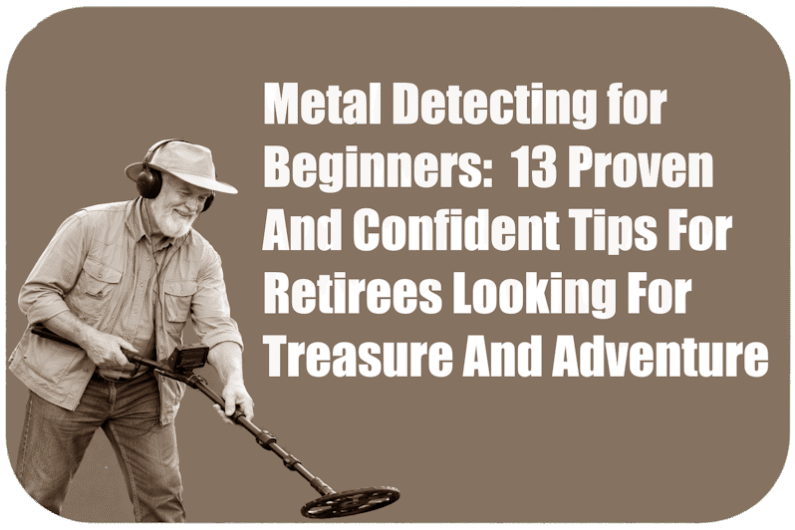
I didn’t start metal detecting to get rich. I started because I liked being outside, I love history, and I liked the idea that something forgotten was still waiting to be found. Decades later, I can tell you this plainly—Metal Detecting For Beginners is less about treasure and more about process. The treasure comes later (sometimes much later). The process is what hooks you.
If you’re patient, curious, and willing to learn, you’re already ahead of most beginners.
Why Metal Detecting Works So Well for Beginners (Especially Retirees)
Metal detecting fits real life. You can hunt for 30 minutes or lose an entire afternoon without noticing. I’ve done both—usually by accident.
Why it works:
- Low-impact movement that doesn’t beat up your joints
- Mental engagement without stress
- Flexible schedule (no alarms, no deadlines)
- Outdoor time with purpose
Metal detecting for beginners shines because you control the pace. Even slow days are still pretty good days.
What Metal Detecting Actually Is
At its core, metal detecting is using an electronic device to locate metal objects beneath the surface. In reality, it’s part walking, part listening, part digging, and part thinking. You’re interpreting signals, making judgment calls, and deciding when to dig and when to walk on.
And yes—you will dig trash. Lots of it. That’s not failure. That’s tuition. Every hole teaches you something.
Choosing a Metal Detector for Beginners
Here’s where metal detecting for beginners often goes sideways. People buy too much machine and not enough comfort when they get their first metal detector.
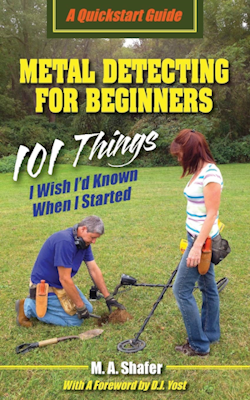
The best metal detector for a beginner is one that’s easy to understand, comfortable to swing, and honest about what it’s telling you. Clear audio tones, simple controls, and decent discrimination matter far more than extreme depth or flashy features (those come later).
A lightweight, well-balanced detector that let’s you hunt longer and learn faster, which is where real skill is built. For beginners, success isn’t about power—it’s about confidence, patience, and time on the ground. If you’re looking to buy your first metal detector, you’ll want:
- Lightweight build
- Simple controls
- Clear audio tones
- Decent discrimination
You do not need top-tier depth, fifty menus, or a detector that feels like swinging a cinder block. You can find excellent coins, old metal buttons, and other treasures with a modest machine because you can swing them longer—and listen better.
Comfort beats power, EVERY time, especially if you are a casual treasure hunter.
If you’re looking for a metal detector for beginners for casual treasure hunting like coins, jewelry, relics in parks, beaches, and old gathering spots—the type of metal detector that will work best for you is a mid-range VLF (Very Low Frequency) detector like the Bounty Hunter TK4 Tracker IV Metal Detector. Not only is it affordable, but it also comes with good discrimination and easy controls. These metal detector for beginners balance depth, clarity, and simplicity, so you spend more time digging real targets and less time scratching your head over menus.
Here’s why VLF is ideal for casual hunting:
- Discrimination helps you ignore trash and focus on meaningful signals.
- Clear audio tones and target ID make learning easier (you actually understand what the machine is saying).
- Lightweight and comfortable means longer hunts without shoulder fatigue.
- Affordable — you don’t need to break the bank to have fun.
In everyday terms: a good VLF detector feels like a partner, not a puzzle. You swing, you listen, you learn—and you find more interesting stuff, sooner.
Best Metal Detector For Beginners for Casual Gold Prospecting
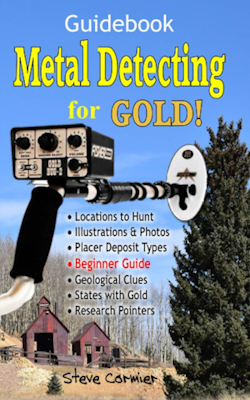
The difference between treasure hunting with a metal detector and gold prospecting with one comes down to targets, locations, and your mindset. Those metal detector for beginners differences matter more than most beginners realize.
Gold prospecting, on the other hand, is about finding natural gold—nuggets and flakes, in harsh, mineralized ground where people didn’t lose valuables, but nature hid them.
Discrimination matters far less, digging trash is unavoidable, and success depends on ground balance, sensitivity, and geology knowledge. It’s slower, tougher, and more physically demanding—but when gold shows up, it’s UNFORGETTABLE.
My go-to metal detector for prospecting is my trusty Fisher Labs GOLDBUG Pro Coil Combo. It comes with both the 5-inch and a 10-inch DD coils, and it won’t break the bank at about $400
Choosing Your Best Metal Detector Type For Gold Prospecting
Okay, if your serious about buying a metal detector for gold prpospecting, then you need to do your research and think about which one you want to buy. Both the PI and the Hi-Freq VLF metal detectors find gold—but they play different games. The best choice depends on where you hunt, how mineralized the ground is, and how much digging you’re willing to do.
1. Pulse Induction (PI)
Pulse Induction (PI) detectors, are built to handle tough ground conditions. They punch deep, ignore most mineralization, and stay stable in places where VLF machines get noisy and frustrating. PI detectors don’t offer meaningful discrimination, so you dig almost everything—but that’s the price you pay for depth and reliability in serious gold country. In simple terms: VLF detectors excel at finding small, shallow gold with more information, while PI detectors shine when you need raw power and stability in harsh ground.
- Excellent in mineralized soils (common in gold country)
- Good depth on nuggets and flakes
- Simple signal (you focus on beat detection, not fancy menus)
Ideal if: You’re hunting classic gold territory — desert washes, creek beds, tailings.
2. High-Frequency VLF Gold Detectors
High-frequency VLF (Very Low Frequency) gold detectors are designed to be extremely sensitive to small gold, especially flakes and sub-gram nuggets. They operate at higher frequencies (often 15–70 kHz), which makes them excellent at sniffing out tiny targets near the surface. VLF machines also provide better discrimination and target ID, helping you identify junk versus potential gold—useful when you’re still learning what real gold sounds like. The trade-off is that VLF detectors can struggle in heavily mineralized ground, where hot rocks and ground noise can mask signals.
- Higher frequencies make them more sensitive to tiny gold
- Better discrimination than basic PI
- Still user-friendly for beginners
Ideal if: You want a true gold focus but aren’t ready for a full PI learning curve.
For many beginners or intermediate hobbyists, a high-frequency VLF gold detector (like a Gold Monster 1000 or the Fisher Labs GOLDBUG Pro Coil Combo) is also a solid choice because it’s more forgiving and user-friendly while still being sensitive to small gold near the surface — and locals often pair these with PI machines depending on soil conditions.
12 Proven And Simple Ways to Create Custom GPS Symbols
Do Search Coil Wands Matter For Metal Detecting
This is the “wand” most metal detector for beginners mean—even if they don’t call it that. The search coil is the round or oval loop at the bottom of your metal detector shaft. This is what actually sends the signal into the ground and listens for metal. What you need to know is: different coil shapes mean different strengths.
Round Coils
Round coils are the most common, especially on beginner machines.
Best for:
- Even ground coverage
- Accurate target ID
- Coin and jewelry hunting
They’re predictable and very forgiving. I learned on round coils, and they taught me discipline—slow swings, tight overlap, good habits. If you’re new, round coils are your friend.
Elliptical Coils
These are oval-shaped coils, longer than they are wide.
Best for:
- Tight spaces
- Trashy areas
- Working between rocks and roots
Ellipticals separate targets better. If hunt old parks full of junk, you might switch to one of these. Less ground under the coil means fewer lies from your detector. An elliptical coil can be a great upgrade once you understand your metal detector’s signals.
Small Coils (Sniper Coils)
These are compact coils—usually 5–6 inches.
Best for:
- Heavy trash areas
- Old home sites
- Iron-infested ground
They don’t go deep, but they’re precise. Think scalpel, not shovel. When everything sounds good and bad at the same time, a small coil can help you narrow down your search area.
Large Coils
Big coils cover more ground and hit deeper targets.
Best for:
- Open fields
- Beaches
- Low-trash areas
Downside? Heavier, noisier, and less accurate in trash. I only use big coils when the site justifies it. Bigger isn’t better unless conditions are right.
So Which Wand Type Should YOU Use?
Here’s the honest recommendation:
- Beginner: Standard round coil + pinpointer
- Trashy sites: Elliptical or small coil
- Open areas: Larger coil
- Target recovery: Pinpointer wand
You don’t need all of them at once. Learn one setup well, then expand as your metal detector for beginners skills do.
Basic Gear You Actually Need (Nothing More)
Basic metal detecting for beginners starts out simple. Most beginners quit because they feel “under-equipped” when the truth is the opposite. Besides your metal detector, I recommend you have a pinpointer wand to help localize your finds as you dig. After that, all you need is some basic essential gear:
- Shovel
- Hand digger or small trowel
- Finds pouch (one side for trash, one for keepers)
- Gloves
- Knee pads or kneeling mat
- Optional headphones
That’s it. Anything else can wait until you figure out what kind of treasure hunter you are.
Learning Detector Signals: The Language of the Beep
Metal Detecting For Beginners lives or dies right here. Your detector talks. Simply put, you need to learn its “language”. Here’s the plain-English breakdown of basic metal detector signals, the kind you actually learn to trust in the field.
Clean, repeatable tone is your bread and butter. When you swing over a target and get the same sound from multiple directions, that’s usually a solid piece of metal like a coin, ring, or relic. These signals tend to sound smooth and confident (almost polite), and they don’t disappear when you slow down. If it repeats, it earns a hole.
Broken, scratchy, or jumpy signals usually mean junk. Think bottle caps, rusty iron, or oddly shaped trash that confuses the detector. The sound will change as you change direction, and the target ID numbers (if you have them) will bounce around. Beginners dig these a lot at first—and that’s okay. It’s how your ears learn.
One-way or one-time beeps are often false signals. You hear them once, try to re-locate the target, and suddenly it’s gone. Most of the time, that’s ground noise, mineralization, or iron fooling the detector. Early on, I’ll still investigate a few—but experience teaches you when to walk on.
Depth and strength cues matter too. Loud, sharp signals are usually shallow; softer, whispery signals can mean deeper targets (sometimes good, sometimes not). As you gain experience, you’ll learn to read tone quality, signal consistency, and depth together—not just one at a time.
Bottom line: repeatability beats everything. If a signal is steady, repeatable, and makes you curious—dig it. That’s how every good find I’ve ever made started. Early on, dig more than you think you should. That’s how your brain builds a signal library. Trust me—your ears get smarter.
Best Places to Start Metal Detecting for Beginners
Location beats equipment. That’s been proven more times than anyone can count. Here’s the honest, beginner-friendly answer I can give you—the best places to start learning metal detecting are places that forgive mistakes and still reward curiosity. Free advice here: Early success builds confidence, and confidence keeps you swinging.
Public parks are hands-down the best classroom. They’re usually easy to access, relatively safe, and full of modern drops like coins and jewelry. Older parks are especially good because decades of foot traffic means steady targets. You’ll dig trash, sure—but you’ll also learn signals fast, and that’s the goal early on.
Beaches are another excellent training ground, especially dry sand. Digging is easy, targets are often shallow, and you don’t have to worry much about damaging turf. After busy weekends or storms, beaches can be surprisingly productive and very encouraging for beginners.
Schoolyards, picnic areas, and fairgrounds (with permission and local rules followed) are also great places to learn. These spots concentrate people, movement, and lost items, which means more signals and more practice. The key early on isn’t finding rare treasure—it’s hearing lots of signals, digging cleanly, and learning what your detector is telling you.
Legal and Ethical Ground Rules for Detecting and Digging
Avoid restricted sites, posted areas, and private property without permission. Respect keeps this hobby alive. This matters a lot.
Always:
- Get the owners permission before going onto the property
- Get the required city, county, state, and federal permits to metal detect
- Follow local laws
- Respect historical items
- Fill in the holes you dig
- Remove trash
Your reputation matters—both yours and our hobby’s. One bad hombre metal detecting can ruin it for everyone
Research: The Quiet Advantage Beginners Overlook
This is where Metal Detecting For Beginners turns from random to intentional. I live here in the American Southwest. We have old mines, ghost towns, old Indian War sites, old military bases. All these cool places to not only explore for photography and fun, but are awesome places to metal detect.
Best Research Resources:
- Old maps
- Aerial Photographs
- Mining Claim maps (make sure the claim isn’t active)
- Historic photos
- Newspaper archives
- Former gathering places
People lose things where they used to gather, not where they gather now. The key here is to Look for people spots – Places where folks gathered historically. This means you have a higher chance of finding lost items. Once you understand that, your finds improve.
Safety and Comfort in the Field
Even in an urban environment, you’ll at least want to wear a hat to block the sun, but once you leave town. You need to be prepared. Hopefully, if you do remote trips, you pack along extra water and food and have a basic emergency/survival kit in your trunk just in case.
Basic metal detecting rules for beginners:
- Tell someone where you are going. Especially if you’re going solo to a remote area.
- Bring a map of the area and GPS if you have it.
- Stay close to your vehicle.
- Stay hydrated. Be sure to bring plenty of water and electrolytes with you. Both on you (as in a canteen) and in your vehicle.
- Wear proper sun protection. ie: hat, long sleeves, long pants, sun block.
- Stretch before and after.
- Watch your footing and wear a good pair of boots.
- Watch your immediate area for snakes, scorpions, etc, before you drop down to start digging.
- Carry a sidearm. This is optional, but you never know what can happen, or what you may run into when you’re out in the boonies.
- Carry a fully charged cell phone.
Metal detecting should leave you energized, not wrecked or hospitalized right?
The Social Side of Metal Detecting
Metal detecting doesn’t mean you have to do this solo. There are many social media groups and clubs who add a whole extra layer to the hobby—one that many people don’t expect but end up valuing just as much as the finds.
First off, joining a metal detecting club will accelerate your learning. You pick up tips on detector settings, site research, recovery techniques, and local laws that would take years to figure out alone. Seeing how experienced hunters work a site—how slow they swing, when they dig, when they move on—is hands-on education you can’t get from manuals or videos.
Second, there’s the motivation and accountability factor. Group hunts get you out of the house, even on days you might otherwise skip detecting. Sharing finds—good and bad—keeps expectations realistic and spirits high. When everyone’s digging trash together, it feels normal (because it is).
Clubs also open doors to better access and opportunities. Many groups secure permissions for private land, organize seeded hunts, and stay informed about legal changes. Some even partner with landowners or historical groups. That kind of access is hard to get when you go solo.
Finally—and this part matters—metal detecting clubs provide camaraderie. Stories get shared, friendships form, and the hobby becomes less about what you find and more about who you find it with. You can hunt alone anytime, but being part of a group reminds you that this odd little hobby has a strong, welcoming community behind it.
Final Thoughts About Metal Detecting For Beginners
If you’re stepping into Metal Detecting For Beginners, here’s the truth:
- You’re not behind.
- You’re not too old.
- You’re not doing it wrong.
You’re learning. So grab your detector. Swing slow. Listen carefully. Dig clean. The treasure will come—sometimes in the ground, sometimes in the experience. And every once in a while? You’ll hear that tone. That’s why we do this.
Want more practical, experience-backed articles like this? Subscribe to our newsletter today and get expert senior-focused tips, strategies, website updates, and announcements delivered straight to your inbox.