
Discovering the Joy of Birding After Retirement
If you’re newly retired and looking for a relaxing, rewarding hobby, birdwatching for seniors might be the perfect fit. Birdwatching (also known as birding) lets you explore nature, learn new skills, and enjoy peaceful moments outdoors. It’s a flexible pastime — you can do it from your backyard, a local park, or during travel adventures — and it’s suitable for nearly every fitness and mobility level.
For me, it starts with being able to sit on my deck and watch the hummingbirds on their feeders.
Why Birdwatching For Seniors Is the Perfect Hobby
Starting birding in retirement offers more than just a pastime — it delivers real physical and emotional benefits.
- Gentle Physical Exercise
Birding naturally encourages walking, stretching, and balance — all low-impact activities ideal for older adults. Even a short stroll through a garden or park counts as healthy movement.
- Mental Stimulation
Learning to identify bird species, calls, and seasonal behaviors keeps the mind sharp and engaged. Birding is an ongoing education in nature that challenges memory and focus.
- Emotional and Social Benefits
Watching birds reduces stress, lowers blood pressure, and promotes relaxation. Plus, joining local birdwatching for seniors clubs or community walks can help you meet new friends and stay socially connected.
- A Sense of Purpose
Keeping a birding journal and tracking migration patterns gives retirees a sense of accomplishment and contributes valuable data to citizen science projects.
How to Start Birdwatching for Beginners
Find Birds Near You
You don’t need to travel far to find birds. Your local community probably has some great places to start birdwatching. Start in your own yard or local park. Look near water, flowering plants, wooded areas, riparian habitats — birds gather where food and shelter are abundant.
Pro Tip: The best time for birdwatching for seniors is early morning, when birds are most active and vocal. Bring your binoculars, move slowly, and listen carefully — you’ll often hear birds before you see them.
Join a Local Birdwatching for Seniors Group
Many communities and nature centers offer birdwatching for seniors or beginner birdwatching classes. Joining one helps you learn faster and connect with experienced enthusiasts. Your social media may have local birdwatching for seniors groups to join as well.
Keeping a Birding Logbook
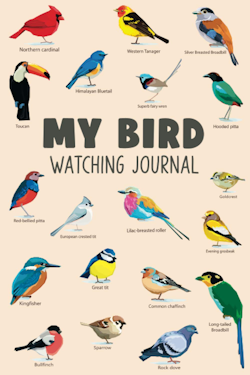
A birding journal helps you track your progress and deepens your appreciation for our local wildlife. Amazon has some great logbooks to choose from. I use My Bird Watching Journal to log my sightings, and it stays stowed in my Outdoor Sling Shoulder Backpack along with a couple mechanical pencils and ink pens each .
What to Record
- Bird species and behaviors
- Date and time of sighting
- Location and weather
- Notes on calls, colors, or nesting
There should be room for each sighting to do some sketching if you’re able to draw
Digital Birding Tools
Apps like eBird and Merlin Bird ID (both from the Cornell Lab of Ornithology) help you identify birds, log your sightings, and even contribute to global conservation research.
Essential Birdwatching Gear for Seniors
Having the right birding gear makes your experience easier, more enjoyable, and safer. Here’s a breakdown of basic and advanced birding equipment to get started.
Basic Birding Gear
You don’t much to get started. You probably have half the gear already, and the rest is easy to get
- Comfortable Clothing: Dress in neutral colors and wear layers for changing weather. Look for tans, khakis and sage green colors. What is natural in your area of operation? (See! You most likely already have this)
- Sun Protection: Use a wide-brimmed hat, sunglasses, and sunscreen. If you’re like me and live in the American Southwest, you already have this handy.
- Walking Stick: Provides balance and stability on uneven paths. If you don’t have one, you can pick one up on your next trip outdoors. Carry a folding saw and be on the look-out!
These additional items should round out your basic birding kit
- Hydration bottle or pack. I live in Arizona. Besides having a cooler full of bottled waters when I hit the road, I carry a hydration flask or my hydration pack when I step away from my truck when I am outdoors. For addition safety not only for myself, I also take several Dr. Price’s Electrolytes Powder Packets to replace lost electrolytes as you get dehydrated. Always be prepared for an outdoor emergency!
- A Bird Indentification handbook. I live in Arizona and use the Birds of Arizona Field Guide. You can shop Amazon or your local bookstore and find one for your state or region. If you’re travelling, get a guide for the area.
- Birding Apps: Use Merlin Bird ID or eBird to identify species and share sightings.
- Notebook or Birding Journal: Keep detailed notes of your sightings like I do with a Bird Watching Log Book .
- Lightweight Binoculars (8×32 or 12×42): find a set that is easy to hold and great for most conditions.
- A lightweight pack to carry your gear in. I prefer the Outdoor Sling Shoulder Backpack. It comes in a variety of colors and holds my bird ID handbook, birding journal, binoculars and still has room for a iPad or tablet. Its easy to wear and stow in your car.
Advanced Birding Gear
If your ready to step up your birdwatching for seniors game, then it’s time to think of more advanced tools you can use while birding
- Portable Chair or Stool: Great for long observation sessions.
- Digital Camera with Zoom Lens: Capture clear photos to identify birds later. I have my Nikon D3400 that I use. I set it up with my 300mm Zoom and keep a 70mm lens handy for close-up work.
- Spotting Scope and Tripod: Perfect for long-distance bird viewing. You can’t beat a spotting scope for bird observation. For your spotting scope and camera I would suggest a heavy-duty tripod like my JOILCAN. You’ll need that heavy-duty sturdiness to sport your camera or scope, but also to stand against wind conditions and to prevent wobble with heavy optic set-ups.
- Sound Recorder: Capture bird songs for later identification. You may find that the distance to your subject may make recording difficult, so I would suggest that if you want to record bird audio, that you look into using a parabolic mic and attach it to your audio recorder to capture the best quality sounds.
- Video Drone: This option, along with your Sound Recorder rig, would make for some great video content if you have a birding YouTube channel.
- Backpack: Looking at the items listed above, you’ll need something to carry that gear in.
Common Challenges for Senior Birdwatchers
While birding is accessible to most retirees, there are some potential challenges we all face.
Mobility or Balance Issues
Rough trails can be difficult for seniors with limited mobility. Choose accessible birding locations with paved or flat paths and use trekking poles, all-terrain rollator, or an all-terrain mobility scooter for support. You may be able to manage rougher terrain with an all-terrain electric trike. Just be careful and aware of your limits.
Weather and Health Concerns
Extreme cold or heat temperatures can pose risks. Schedule birding outings during mild mornings or evenings. Be sure to wear weather appropriate clothing and rain gear and have it readily available. Do not forget to STAY HYDRAYTED.
Heavy Equipment
Avoid strain by choosing lightweight binoculars and compact scopes. A small backpack or chest harness can help distribute weight comfortably.
Limited Access to Remote Areas
If traveling far isn’t possible, backyard birdwatching for seniors is a wonderful alternative. A few feeders, a birdbath, and native plants can turn your yard into a mini wildlife sanctuary.
Final Thoughts: A Lifelong Hobby that Nurtures the Soul
Birdwatching for seniors offers a peaceful, purposeful connection to the natural world. Whether you’re watching robins from your porch or tracking rare species on a guided walk, birdwatching provides exercise, education, and serenity in every season of life.
Grab your binoculars, open your logbook, and step outside — your next birdwatching for seniors adventure begins with the flutter of wings.
Want more practical, experience-backed articles like this? Subscribe to our newsletter today and get expert senior-focused tips, strategies, website updates, and announcements delivered straight to your inbox.