Gardening is a joyful and rewarding activity at any age, and growing moringa is an especially easy growing choice for seniors. Moringa is known for being a fast-growing, resilient plant that doesn’t require complicated care, making it ideal for those of us, who want healthy results without all the heavy physical work. With the right approach, seniors can enjoy fresh moringa leaves while staying comfortable and relaxed in the garden.
This article on moringa gardening tips for seniors is designed to make the process simple and enjoyable. From choosing easy-to-manage planting options to reducing strain with smart gardening techniques, these tips focus on comfort, safety, and success. Whether you’re new to moringa or just looking for gentler ways to garden, you’ll find friendly, practical advice to help you grow moringa with ease and satisfaction.
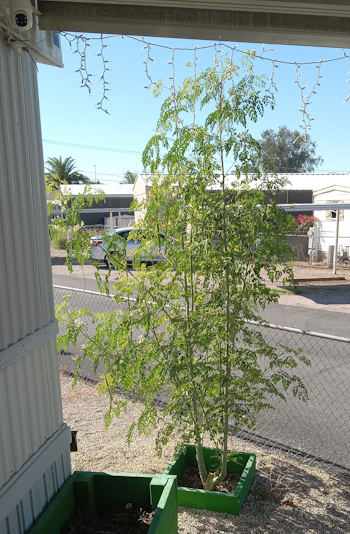
So the thought of growing your own Moringa tree has you all fired up? I get it. It’s the same for me. So, 2 years ago, I planted a small Moringa tree in my yard. I originally bought this Moringa from a local Tucson nursery in a 1-gallon pot for $5 back in 2024. I planted it for two reasons. #1 is the health benefits. And I want this tree to shade this part of my home from that blazing Arizona afternoon sun during the summer.
In its first year, as it grew, I trimmed all the limbs except at the top, and it grew to about 14’ height. Then, I thought it had died over winter. It appeared to dry up and lost all of its limbs.
Next, I cut it back and chopped it down to about a 3 inch little stump in the ground and planned to pull it out in the spring and replant with another Moringa. As February rolled around, I noticed two pencil-sized sprouts started growing out of its small stump.
Look at it now 10 months later, and a lot bushier than last year. I took this picture December 10th 2025. It’s 12–13 feet tall and still growing. Man.., that’s not marketing. That’s biology. Health benefits, AND shade from the Arizona sun?
That’s a nice ROI, my friend!
Moringa Gardening Tips For Seniors: Why Grow Your Own Moringa.
Growing your own moringa is an choice for seniors. But let’s face it, watching these trees grow is fun if you ask me. Grab your tape measure because you can see it grow inches every day.
So why grow one? It’s simple, you plant and grow Moringa for basically 2 reasons. Number 1 is for the shade these rapidly growing trees can provide. If you need summer shade, grow a morniga. Number 2 is for its many, many health benefits.
Think about it. Growing your own moringa gives you the satisfaction of harvesting fresh homegrown leaves. Knowing exactly where your food comes from brings peace of mind, and adding moringa in your meals or teas will definitely add a nutritious boost to everyday routines.
Moringa is the easiest plant to grow. It adapts well to containers or small garden spaces, and it doesn’t require constant attention. Caring for a moringa plant offers you an enjoyable hobby and can give you a sense of daily purpose—all of which supports our physical and mental well-being as we get older.
7 Awesome Moringa Benefits for Seniors: A Gentle Guide to the Healing Tree of Life
Let’s get down to the nuts-and-bolts of growing Moringa. We’ll start off with where it grows best and go from there.
Moringa Gardening Tips For Seniors: Where Moringa Grows Best
Moringa originated in the arid regions of India. Growing moringa here in the American Southwest is surprisingly easy where you can harness the region’s natural warmth and abundant sunshine. This drought-tolerant tree thrives in hot, dry climates, making it well-suited for states like Arizona, New Mexico, Nevada, and parts of Texas. All offer perfect growing conditions.
But that’s not all. While moringa favors the dry and semi-arid regions, you can grow it in a “tropical” area like Florida too. Florida is another paradise for moringa—if you respect moisture. Heat isn’t your problem in Florida. No, it’s going to be rain, humidity, pests, and soggy soil. Same tree as the desert, you just have totally different rules to abide by?
Moringa thrives in:
- Warm climates (70–95°F)
- Full sun
- Well-drained soil
- Dry or semi-arid regions
Moringa Gardening Tips For Seniors: How Many Moringa Trees Should I Plant?
That’s a good question. Space is an obvious concern, but how much moringa do you need? Is this just for you and your immediate family, or are you looking to market this for profit?
1-3 trees should be enough to keep you and your family in Moringa year-round. For most households, 2 to 3 moringa trees should be plenty to support a family of 4. Plant your trees 10–15 feet apart (or use large pots if space is limited) Let’s break it breakdown:
- 1 tree – Can still help, but harvests will be more limited
- 2 trees – Plenty for regular use of fresh leaves (soups, smoothies, teas) a few times per week
- 3 trees – Ideal if your family uses moringa daily, wants to dry leaves, or share with others
Why does this work? It’s pretty easy, moringa grows fast, and you can harvest the leaves every 4–6 weeks if you prune your trees properly. Harvest only ⅓ of the leaves at a time to keep trees healthy. Keep in mind, regular pruning encourages bushier growth and higher yields. Each tree is capable of producing large amounts of leaves year-round in warm climates.
If you need more than this, then you’re looking at having some acreage and planting a heck of a lot more Moringa.
Moringa Gardening Tips For Seniors: How To Grow Moringa
1. Grow From Seeds or Cuttings (Both Are Easy)
Lets be real. Moringa is real easy to grow. Cuttings are easier to go with, but if you’re handy starting from seed, then go for it.
Seeds:
- Plant 1 inch deep
- Sprout in 7–14 days
- Fast, reliable, cheap
Cuttings:
- Use a healthy 2–3 ft branch
- Plant 12 inches deep
- Grows even faster in warm climates
Seeds are great for beginners. Cuttings are great if you already have access to a mature tree. My tree came from a cutting and it’s done great.
2. Containers Work (Surprisingly Well)
If you’re in a cold or variable climate, try growing moringa in a large pot. Use a deep container like a 30 gallon size with excellent drainage, and make sure it has full sun. Bring it indoors or into your garage during the winter. Just so you know, container moringa grows slightly slower, but it’s still productive and much easier to protect than a tree outdoors.
3. Drainage Comes First (Before You Plant ANYTHING)
For those of us who live in Florida, your soil loves to stay wet. Moringa does not! So make sure you have good drainage where you plant your Moringa. For Arizona or southwestern regions, the best soil for moringa is fast-draining, sandy, and slightly alkaline. Moringa thrives in desert-style soils as long as water drains quickly.
Plant on a slight mound or raised area so water drains away from the roots. If you dig a hole and it fills with water after rain, don’t plant there. Fix the spot or move on. Root rot is the #1 killer of Moringas, and it’s usually self-inflicted.
The Golden Rule for Moringa: Standing water = guaranteed failure.
4. Prune Early, Prune Often
This is where most beginners mess up. Once your tree hits 12–18 inches, cut the top. Yes, really. Pruning forces lateral growth, strengthens the trunk, and keeps the tree harvestable. Tall, skinny moringa trees snap, flop, or underperform. Bushy trees produce MORE leaves. Period.
5. Sun Is Still King
Full sun don’t scare Moringa, but shade slows it down. Plant in full sun for best growth and leaf production. Morning sun is good, afternoon sun is better. The faster it grows, the stronger it becomes—and strong trees handle pests and disease better.
6. Water Less Than You Think
Rain already does most of the work in Florida. However, in Arizona’s hot, dry climate, moringa trees need deep but infrequent watering, especially once established. How often you water depends on the tree’s age and season.
Newly Planted Moringa (first 2–3 months)
- Water: Every 2–3 days
- How: Deep soak the root zone (not light sprinkling)
- Keep soil moist but never soggy.
Established Moringa (after ~3 months)
Summer (May–September)
- Water: Every 5–7 days
- During extreme heat (110°F+), you may need every 3–4 days
- Always let the top 2–3 inches of soil dry out between waterings
Fall & Spring
- Water: Every 7–10 days
Overwatering is a fast track to root problems. Moringa prefers cycles of wet and dry, not constant moisture. Let the roots breathe.
If it’s raining regularly, just put the hose down. Signs to watch out for:
- Too little water: Drooping leaves (usually recover quickly after watering)
- Too much water: Yellow leaves, soft trunk, root rot
7. Airflow Is Not Optional
Give your moringas some space, like 15′ of open area around each tree. Don’t crowd it between buildings or other trees. Prune for airflow, not just shape. Your trees’ leaves need to be able to dry quickly after a rain. If they stay wet all day, disease follows.
Think “open and breezy,” not jungle chaos.
8. Go Easy on Fertilizer
Fertilizing a moringa tree is simple because moringa is naturally fast-growing and does not require heavy feeding. In fact, over-fertilizing can reduce leaf quality. The goal is to support steady growth without forcing it. For best results, make sure you start with healthy, well-drained soil. Mixing in compost or well-rotted manure at planting time provides enough nutrients for the first few months. After that, fertilize with light, organic fertilizers like compost or worm castings rather than chemical-heavy products.
Here’s an easy guide to fertilizing your Moringas:
- Compost or aged manure: Apply around the base every 2–3 months
- Balanced organic fertilizer (e.g., 10-10-10 or 5-5-5): Use sparingly, once or twice per growing season
- Nitrogen (optional): If leaf growth slows, a small boost of nitrogen (fish emulsion, compost tea) can help
- Avoid excess phosphorus: Too much encourages roots over leaves
Make sure you water after fertilizing so the nutrients reach the roots, but be sure you avoid oversaturating and soggy soil. Keep in mind, with poor soils, light feeding supports leaf production, while in fertile soils, moringa often thrives with little to no added fertilizer. It’s simple, if it’s Green and growing? Leave it alone!
9. Protect From Cold (But Don’t Panic)
Moringa is a tropical plant, which means frost will knock it back. Winterizing your moringa tree is essential in regions where temperatures drop below 40°F, as cold weather can damage or kill this tropical plant. Begin by reducing watering in late fall to help the tree naturally slow its growth. Go and apply a thick layer of mulch around the base to insulate the roots from cold soil.
If your moringa is planted in the ground, prune it back to a short stump. This will help it survive dormancy and regrow in spring. For container-grown moringa, bring the pot indoors to a sunny window or sheltered garage where temperatures stay above freezing.
If temperatures drop below 40°F, expect leaf drop or dieback. Don’t worry, this is normal. Cut it back, mulch the base, and wait. As long as the roots survive, moringa rebounds FAST in warm weather. I’ve seen “dead” trees explode back to life in spring.
Want more practical, experience-backed articles like this? Subscribe to our newsletter today and get expert senior-focused tips, strategies, website updates, and announcements delivered straight to your inbox.