What Are The 4 Different 100% Disability Ratings
So before we get into the federal and state disability benefits available, lets take a quick look at the 4 types of disability you can have at a 100% disability rate. They are:
1: Schedular Disability Rating
A schedular VA disability rating is a percentage assigned to a service-connected condition based on the VA Schedule for Rating Disabilities (VASRD). A schedular 100% rating does not automatically impose the employment restrictions generally associated with TDIU. Individual circumstances and other benefit programs may still matter. These are disabilities caused by injuries that occurred or were aggravated during your service.
If you receive a 100 percent disability rating for one service-connected disability, or a combination of these disabilities, you are still able to work full time without disrupting your benefits.
2: Total Disability/Individual Unemployability
Total disability/individual unemployability (TDIU) is a disability rating that may be granted if a veteran’s claim asserts that he or she be paid benefits at the 100 percent disabled rates, even though the disability or disabilities rate below 100 percent. If a veteran is granted 100 percent TDUI disability rating, he or she is not permitted to work full time. Marginal or part-time employment is permitted, but there is a limit to how much income can be earned each year without affecting benefits.
Do your due diligence and make sure you know your income limits on this.
3: Temporary 100 Percent Disability Rating
Veterans may qualify for a temporary 100 percent disability rating if:
- They have been hospitalized for a service-connected disability for 21 days or more
- They have undergone surgery for a service-connected disability that requires a recovery period of at least 30 days
When the temporary 100 percent disability rating is granted, the VA pays benefits at the 100 percent rate for the period the veteran is hospitalized or throughout the recovery period.
4: Permanent And Total
You could say this is the “golden ticket” rating everyone aspires too. When a veteran’s service-connected disabilities show no likelihood of improvement and the veteran is expected to stay at a 100 percent disability rating without future reevaluation, the VA may grant the permanent and total disability rating.
Your Benefit Summary and Service Verification Letter will tell you which type of disability you have
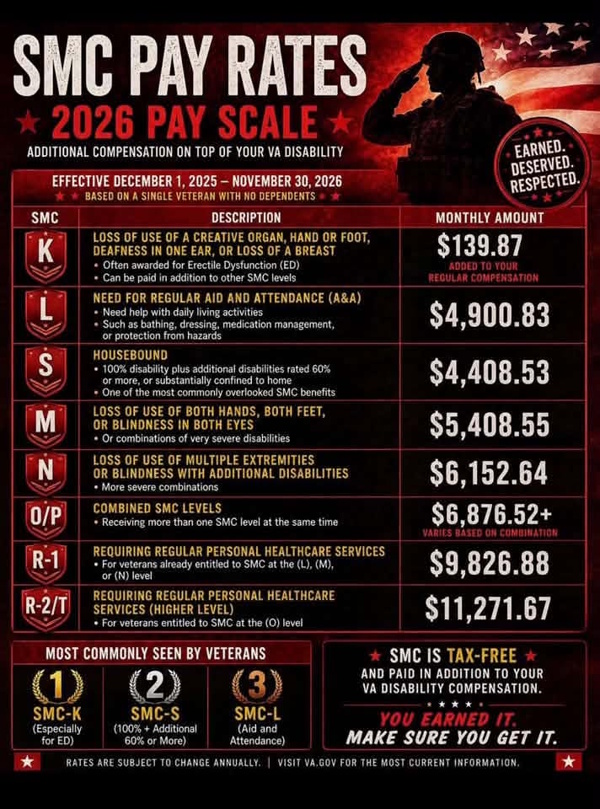
SMC Rates
VA special monthly compensation (SMC) is a higher rate of compensation that we pay to Veterans as well as their spouses, surviving spouses, and parents with certain needs or disabilities.It is an additional tax-free disability compensation for Veterans whose service-connected disabilities involve certain severe impairments or circumstances—such as loss of use of a limb, blindness, being housebound, or needing regular Aid and Attendance.
You can verify which rate you have using the chart below
What VA Disability Benefits are available at 100% disability
If you have a 100% disability rating from the U.S. Department of Veterans Affairs (VA) because of service-connected conditions, you’re eligible for a wide range of federal VA benefits. Many of these benefits are automatic with a 100% rating; others require applications or depend on additional factors (like dependents or permanent & total (P&T) designation). Here’s a comprehensive summary based on current VA policy:
✅ Federal VA Disability Benefits at 100% Disability.
1. Monthly VA Disability Benefits Compensation
Monthly VA Disability Benefits Compensation is a tax-free monthly payment provided to eligible veterans who have a service-connected illness, injury, or medical condition. The amount you receive depends primarily on your VA disability rating, which ranges from 0% to 100% in 10% increments. Veterans with higher disability ratings generally receive larger monthly payments, and additional compensation may be available for qualifying dependents, special circumstances, or certain severe disabilities.
Understanding how monthly VA disability compensation works is an important step toward receiving the benefits you’ve earned through your military service. Learning about disability ratings, eligibility requirements, and the claims process can help you make informed decisions and avoid common mistakes. With the right information and supporting evidence, you can confidently navigate the VA system and ensure you’re receiving every benefit for which you qualify.
You can look at the veterans disability compensation rates here: Veterans Disability Compensation Rates
2. VA Health Care
VA Health Care provides eligible veterans with access to a wide range of medical services designed to support their physical and mental well-being. Depending on your eligibility and priority group, you may receive preventive care, primary care, specialty care, mental health services, prescription medications, emergency care, rehabilitation, and long-term care. Many veterans also have access to community care providers when VA services are not readily available or when they meet specific eligibility requirements.
Learning how to enroll in VA health care and understanding the services available to you can make a meaningful difference in managing your health over the long term. Taking the time to review your eligibility, gather the necessary documentation, and stay informed about your benefits can help you receive the care you’ve earned through your military service. If you have questions along the way, don’t hesitate to seek assistance from a VA representative or an accredited Veterans Service Officer (VSO) who can help guide you through the process.
3. Dental, Vision & Hearing
Dental, Vision & Hearing Benefits are important parts of a veteran’s overall health care, but eligibility for these services varies based on factors such as your VA disability rating, service-connected conditions, and other qualifying circumstances. While many veterans can receive routine vision and hearing evaluations through the VA, comprehensive dental care is generally available only to veterans who meet specific eligibility requirements. The VA also provides hearing aids, eyeglasses, prosthetic devices, and other assistive technologies when medically appropriate and covered under your eligibility.
Understanding what dental, vision, and hearing benefits you qualify for can help you take full advantage of the care you’ve earned through your military service. Reviewing your eligibility, staying current with routine checkups, and speaking with your VA health care team about any concerns can help detect problems early and improve your overall quality of life. If you’re unsure about your eligibility, a VA representative or an accredited Veterans Service Officer (VSO) can help you understand your options and guide you through the application process.
4. Travel Pay
VA Travel Pay helps reimburse eligible veterans for transportation expenses incurred while traveling to and from approved VA health care appointments. Depending on your eligibility, reimbursement may cover mileage driven in a personal vehicle, as well as certain costs for public transportation, tolls, parking, or specialized transportation when medically necessary. Eligibility is based on factors such as your VA disability rating, income, the purpose of your appointment, and other qualifying criteria established by the Department of Veterans Affairs.
Understanding how the VA travel pay program works can help reduce the financial burden of getting the medical care you need. Keeping records of your appointments, submitting travel claims on time, and learning the current reimbursement guidelines can make the process much smoother. If you’re unsure whether you qualify, don’t hesitate to ask your VA medical center or an accredited Veterans Service Officer (VSO) for assistance—they can help you understand your benefits and ensure you receive the reimbursement you’ve earned.
5. Home Loan & Housing Assistance
A Home Loan & Housing Assistance programs are designed to help eligible veterans, active-duty service members, and certain surviving spouses achieve stable and affordable home ownership. VA-backed home loans often offer valuable advantages, including no down payment for qualified borrowers, competitive interest rates, limited closing costs, and no requirement for private mortgage insurance (PMI). In addition to home loans, the VA offers housing assistance programs that can help veterans avoid foreclosure, adapt homes for disabilities, or obtain grants for accessible housing improvements. Before starting this process, you will need to request a VA home loan Certificate of Eligibility (COE)
Understanding the housing benefits available to you can make buying, refinancing, or keeping your home much more manageable. Taking time to review your eligibility, obtain your Certificate of Eligibility (COE), and compare lenders can help you make informed financial decisions. If you have questions about your options, a VA loan specialist, lender, or accredited Veterans Service Officer (VSO) can help you navigate the process and ensure you’re making the most of the housing benefits you’ve earned through your military service.
6. Education & Training Benefits
VA Education & Training Benefits help eligible veterans, service members, and in some cases their family members, pursue higher education, career training, apprenticeships, on-the-job training, and professional certifications. Programs such as the GI Bill can help cover tuition, housing, books, and other education-related expenses, making it easier to earn a degree, learn a skilled trade, or prepare for a new career after military service. The VA also offers resources for career counseling and employment planning to help veterans reach their long-term goals.
Investing in your education is one of the best ways to build new opportunities and strengthen your future. Taking the time to understand your eligibility, compare available programs, and choose a training path that aligns with your career goals can help you get the most from your earned benefits. If you need guidance, a VA education counselor, your school’s veterans office, or an accredited Veterans Service Officer (VSO) can help you navigate the process with confidence.
7. CHAMPVA Health Coverage
CHAMPVA Health Coverage is a health care program administered by the Department of Veterans Affairs that helps cover medical expenses for eligible spouses, surviving spouses, and dependent children of certain veterans. It is available to family members of veterans who are permanently and totally disabled due to a service-connected condition, who died from a service-connected disability, or who died while permanently and totally disabled from a service-connected condition. CHAMPVA can help pay for many covered health care services and supplies, including doctor visits, hospital care, prescription medications, mental health services, and preventive care. Eligibility requirements and cost-sharing rules apply.
Understanding how CHAMPVA works can help you make informed decisions about your family’s health care coverage and reduce out-of-pocket medical expenses. Taking the time to confirm your eligibility, complete the application accurately, and keep your enrollment information up to date can make the process much smoother. If you have questions, the VA, an accredited Veterans Service Officer (VSO), or a CHAMPVA representative can help you understand your benefits and ensure your family receives the health care coverage you’ve earned through your military service.
8. Employment and Hiring Benefits
VA Employment and Hiring Benefits provide veterans with valuable resources to help them transition into civilian careers and find meaningful employment. Eligible veterans may receive career counseling, resume assistance, job training, apprenticeship opportunities, vocational rehabilitation services, and access to employment programs through the Department of Veterans Affairs and other federal agencies. Veterans may also qualify for hiring preferences when applying for many federal government jobs, giving them a competitive advantage during the hiring process.
Building a successful civilian career begins with understanding the employment benefits and resources available to you. Taking advantage of career planning, skills training, and veteran-focused hiring programs can help you identify new opportunities and achieve your professional goals. If you’re unsure where to begin, a VA career counselor, an accredited Veterans Service Officer (VSO), or your local American Job Center can help you explore your options and create a path toward long-term career success.
How to File a VA Disability Claim: A Step-by-Step Guide
9. Uniformed Services ID Card
Uniformed Services ID Card Benefits for 100% Disabled Veterans provide eligible veterans and, in many cases, their qualifying dependents with access to a variety of military installations and services such as base facilities, exchanges, commissaries, and MWR benefits.. Veterans who are rated 100% Permanent and Total (P&T) by the Department of Veterans Affairs may qualify for a Uniformed Services Identification (USID) Card, which can be used to access military bases, commissaries, exchanges, Morale, Welfare and Recreation (MWR) facilities, and other authorized services, subject to Department of Defense policies and installation-specific rules. Eligibility requirements and available privileges may vary based on federal regulations and local installation policies.
Understanding whether you qualify for a Uniformed Services ID Card can help you take advantage of valuable benefits that support your daily life and your family. Before applying, review the current eligibility requirements, gather the necessary documentation, and schedule an appointment with a military ID card office if required. If you have questions about eligibility or the application process, a military installation ID card office, the Department of Veterans Affairs, or an accredited Veterans Service Officer (VSO) can help guide you through the process and ensure you receive the benefits you’ve earned through your military service.
10. Burial & Memorial Benefits
Burial & Memorial Benefits for 100% Disabled Veterans honor a veteran’s military service while providing valuable support to surviving family members during a difficult time. Eligible veterans may qualify for benefits such as burial in a national or state veterans cemetery, a government-furnished headstone or marker, a burial flag, military funeral honors, and, in some cases, burial allowances or reimbursement for eligible funeral and burial expenses. Memorial benefits are designed to recognize a veteran’s service with dignity and ensure their legacy is properly honored.
Understanding these benefits before they are needed can help ease the burden on your loved ones and ensure your final wishes are carried out. Taking time to organize important military records, discuss your preferences with your family, and review eligibility requirements can make future arrangements much simpler. If you have questions about available burial or memorial benefits, the Department of Veterans Affairs, your state veterans agency, or an accredited Veterans Service Officer (VSO) can help you understand your options and guide your family through the application process when the time comes.
11. Compensation for Dependents
Compensation for Dependents Benefits can increase a veteran’s monthly VA disability compensation when they have eligible family members. Veterans with a qualifying VA disability rating may receive additional monthly payments for a spouse, dependent children, and, in some cases, dependent parents. The amount of additional compensation depends on factors such as the veteran’s disability rating, marital status, the number of eligible dependents, and whether certain children meet the VA’s age or school attendance requirements. Keeping your dependent information current with the VA is essential to receiving the correct benefit amount.
Understanding how dependent compensation works can help ensure you receive every benefit you’ve earned through your military service. If your family situation changes because of marriage, divorce, the birth or adoption of a child, or changes in a dependent’s eligibility, it’s important to notify the VA as soon as possible. Taking a few minutes to review your records and update your information can help prevent payment delays or over payments. If you have questions, an accredited Veterans Service Officer (VSO) or a VA representative can help you understand your eligibility and guide you through the process.
Additional monthly compensation if you have a spouse, children, or dependent parents.
12. Concurrent Receipt of VA & Military Retired Pay
If you’re a military retiree, you may receive both full VA disability compensation and retired pay (known as Concurrent Retirement and Disability Pay

✅ State VA Disability Benefits Benefits Are Extra.
While every state has its own laws and eligibility requirements, veterans with a 100% VA disability rating often qualify for many of the following state benefits. These are the most common state VA disability benefits available.
When you apply for these benefit make sure you get the latest copy of your Benefit Summary and Service Verification Letter. Get yours by logging into your VA portal, then click Get Your VA Benefit Letters. Select VA Letters and then click Benefit Summary and Service Verification Letter. Be sure to check or uncheck specific boxes to include or hide information (such as your monthly award amount, combined service-connected evaluation, or permanent and total status), then download the letter as a PDF.
1. Property Tax Benefits
Property Tax Benefits for 100% Disabled Veterans can provide significant financial relief by reducing or eliminating property taxes on a primary residence, depending on the laws of your state. Many states offer full or partial property tax exemptions to veterans with a 100% service-connected disability, while others provide exemptions based on disability status, income, home value, or other eligibility requirements. Some states also extend these benefits to surviving spouses who meet specific qualifications.
Understanding your state’s property tax program can help you lower your annual housing costs and make the most of the disability benefits for veterans you’ve earned through your military service. Taking the time to review your state’s eligibility requirements, gather the necessary documentation, and submit your application before the required deadlines can make the process much easier. If you have questions, your county assessor’s office or an accredited Veterans Service Officer (VSO) can help you determine your eligibility and guide you through the application process.
- Full or partial property tax exemption
- Reduced assessed home value
- Property tax freeze for eligible veterans
- Exemptions that transfer to surviving spouses in some states
2. Vehicle Benefits
Vehicle Benefits for 100% Disabled Veterans can help reduce the cost of owning and operating a vehicle through a variety of state-sponsored programs. Depending on where you live, these benefits may include free or discounted vehicle registration, disabled veteran license plates, reduced driver’s license fees, parking privileges, and exemptions from certain state or local vehicle-related fees. Eligibility requirements and available benefits vary by state, so it’s important to review the rules that apply where you live.
Learning about your state’s vehicle VA disabilitybBenefits can help you save money while making transportation more accessible and convenient. Taking the time to gather your VA disability documentation, review your state’s application process, and apply for every benefit you qualify for can maximize your savings. If you’re unsure about your eligibility or the required paperwork, your state’s Department of Motor Vehicles (DMV) or an accredited Veterans Service Officer (VSO) can help you understand your options and guide you through the application process.
- Free or reduced vehicle registration
- Free disabled veteran license plates
- Reduced or waived driver’s license fees
- Parking privileges for disabled veterans
- Emissions inspection exemptions (in some states)
3. Education Benefits
Education Benefits for 100% Disabled Veterans can open the door to new career opportunities, personal growth, and lifelong learning. In addition to federal education programs, many states offer tuition assistance, scholarships, fee waivers, and other educational benefits for veterans with a 100% service-connected disability. Some states also extend education benefits to eligible spouses and dependent children, helping military families reduce the cost of earning a college degree, vocational certificate, or professional training.
Understanding the education benefits available in your state can help you make informed decisions about your future and maximize the resources you’ve earned through your military service. Taking the time to research eligibility requirements, application deadlines, and approved schools or training programs can help you get the most value from these benefits. If you need assistance, a VA education counselor, your school’s veterans services office, or an accredited Veterans Service Officer (VSO) can help you navigate the process and choose the educational path that best fits your goals.
- Tuition waivers for veterans
- Free or reduced tuition for spouses and dependents
- Scholarships and grants
- Fee waivers at state colleges and universities
- Textbook assistance programs
4. Hunting, Fishing & Outdoor Recreation
Hunting, Fishing & Outdoor Recreation State Veteran Benefits for 100% Disabled Veterans can make it more affordable to enjoy the outdoors while recognizing the sacrifices made through military service. Many states offer benefits such as free or discounted hunting and fishing licenses, reduced camping fees, complimentary or discounted admission to state parks, and other outdoor recreation privileges for eligible veterans. Because these programs are administered at the state level, the available benefits and eligibility requirements vary from one state to another.
Taking advantage of these outdoor recreation benefits can help you stay active, reduce stress, and enjoy time with family and friends while exploring your state’s natural resources. Be sure to review your state’s veteran benefits eligibility requirements, application process, and any renewal deadlines to ensure you receive the benefits available to you. If you have questions, your state’s wildlife agency, parks department, or an accredited Veterans Service Officer (VSO) can help you understand your options and complete the necessary paperwork.
- Free hunting licenses
- Free fishing licenses
- Free combination hunting/fishing licenses (Arizona has this. It’s a free “for life” license)
- Reduced camping fees
- Free or discounted state park admission
- Boat launch fee waivers
5. Employment Benefits
Employment Benefits for 100% Disabled Veterans are designed to help veterans build successful civilian careers while recognizing the challenges that may come with a service-connected disability. Many states offer employment assistance programs that include hiring preferences for state government positions, career counseling, job placement services, workforce training, and professional licensing assistance. These programs can help veterans develop new skills, explore different career paths, and compete more effectively in today’s job market.
Understanding the employment benefits available in your state can help you take the next step toward achieving your career goals. Whether you’re looking for your first civilian job, changing careers, or returning to the workforce, these resources can provide valuable support along the way. Take time to explore the programs available, prepare your resume, and connect with veteran employment specialists who can guide you through the process. Your military experience has given you valuable skills, and these benefits are designed to help you put them to work in a rewarding civilian career.
- State government hiring preference
- Additional veteran preference points
- Career counseling
- Workforce development programs
- Job placement assistance
- Professional licensing assistance
6. Housing Benefits
- Property tax relief
- Home modification grants
- Adaptive housing assistance
- Home repair programs
- Mortgage assistance during hardship
- Veterans housing assistance programs
8 Essential Steps On How to File a VA PACT Act Claim. Proven Ways to Strengthen Your PACT Act VA Claim
7. Health & Long-Term Care
Housing Benefits for 100% Disabled Veterans can help make home ownership more affordable, accessible, and secure. In addition to federal VA housing programs, many states offer benefits such as property tax relief, home modification assistance, housing grants, mortgage assistance, and programs designed to help veterans remain safely and comfortably in their homes. The types of benefits and eligibility requirements vary by state, so it’s important to review the programs available where you live.
Understanding your state’s housing benefits can help you reduce housing costs and improve your quality of life. Whether you’re purchasing a home, adapting your current home to meet changing mobility needs, or seeking financial assistance during a difficult time, these programs may provide valuable support. Take time to research your state’s eligibility requirements and application process, and don’t hesitate to seek guidance from a housing counselor, your state veterans agency, or an accredited Veterans Service Officer (VSO) to ensure you’re receiving every benefit you’ve earned.
- Reduced-cost or free admission to state veterans homes
- Long-term nursing care
- Assisted living programs
- Veterans homes with priority placement
- Mental health resources
- Caregiver support programs
8. Financial Benefits
Financial Benefits for 100% Disabled Veterans can help improve long-term financial stability by reducing everyday expenses and providing access to valuable state assistance programs. Depending on your state, these benefits may include tax exemptions, utility assistance, emergency financial aid, reduced government fees, retirement income tax relief, and other programs designed to ease the financial burden on veterans with a 100% service-connected disability. Because these benefits are established by state law, eligibility requirements and available programs vary from one state to another.
Understanding the financial benefits available where you live can help you make informed decisions and maximize the support you’ve earned through your military service. Taking the time to research available programs, gather the necessary documentation, and apply for eligible benefits can lead to meaningful savings throughout the year. If you have questions about your eligibility or the application process, your state veterans agency, local veterans services office, or an accredited Veterans Service Officer (VSO) can help you identify the programs that best fit your needs.
- State income tax exemptions (varies)
- Retirement income exclusions
- Emergency financial assistance
- Utility assistance programs
- Disaster relief assistance
- State veteran grants
11. Dependents & Family Benefits
Dependents & Family Benefits for 100% Disabled Veterans are designed to support the spouses, children, and, in some cases, surviving family members of veterans with a 100% service-connected disability. Depending on federal and state eligibility requirements, these benefits may include education assistance, health care coverage, survivor benefits, tuition waivers, financial assistance, and access to additional family support programs. Many states also offer unique benefits that help reduce the financial burden on military families and recognize the sacrifices they have made alongside the veteran.
Understanding the family benefits available to you can help ensure your loved ones receive the support they’ve earned. Taking the time to review eligibility requirements, gather the necessary documentation, and explore both federal and state programs can help your family make the most of these valuable resources. If you’re unsure where to begin, a VA representative, your state veterans agency, or an accredited Veterans Service Officer (VSO) can help you understand your options and guide you through the application process with confidence.
For more info visit the VA benefits for family and caregivers portal
- Tuition assistance for children
- Tuition assistance for spouses
- Survivor benefits
- Educational scholarships
- State veterans cemetery benefits
- Family counseling resources
12. Recreation & Cultural Benefits
Recreation & Cultural Benefits for 100% Disabled Veterans provide opportunities to enjoy parks, museums, historic sites, and other recreational attractions while helping reduce out-of-pocket expenses. Many states offer free or discounted admission to state parks, museums, cultural landmarks, campgrounds, and other public recreation facilities for eligible veterans. Some states also provide discounts on outdoor activities, special events, and recreational permits, making it easier to stay active and connected with your community. Because these benefits are administered by individual states, eligibility requirements and available programs vary.
Taking advantage of these recreation and cultural benefits is a great way to explore new places, spend quality time with family and friends, and enjoy the rewards of your service. Before planning your next trip or outing, take a few minutes to review your state’s eligibility requirements and available discounts. If you have questions about qualifying programs, your state parks department, tourism office, or an accredited Veterans Service Officer (VSO) can help you identify the benefits available and guide you through the application process if needed.
- Free admission to state museums
- Reduced admission to state attractions
- State park passes
- Camping discounts
- Boat registration discounts
- Recreational permit discounts
13. Business Benefits
Business Benefits for 100% Disabled Veterans can help veterans start, grow, or expand a successful business after military service. Depending on federal and state programs, eligible veterans may have access to business training, entrepreneurship resources, low-interest loans, grants, certification programs, government contracting opportunities, and mentoring designed specifically for veteran-owned businesses. Some states also offer tax incentives, procurement preferences, and additional support to encourage veteran entrepreneurship and economic growth.
Building a business takes planning, determination, and access to the right resources, and veteran business programs are designed to help you succeed. Taking the time to research available benefits, develop a solid business plan, and connect with organizations that support veteran entrepreneurs can improve your chances of long-term success. If you’re ready to start or grow your business, organizations such as the U.S. Small Business Administration (SBA), your state’s veteran business programs, or an accredited Veterans Service Officer (VSO) can help you identify opportunities and make the most of the benefits you’ve earned.
- Veteran-owned business certification
- Small business grants
- Low-interest business loans
- Procurement preferences
- Entrepreneurship training
- Business mentoring
14. Legal & Administrative Benefits
Legal & Administrative Benefits for 100% Disabled Veterans can help simplify important legal matters and reduce the cost of accessing essential services. Depending on your state, eligible veterans may qualify for free or low-cost legal assistance, help with estate planning, assistance completing benefit applications, document recording fee waivers, notary services, and other administrative support programs. Many states also provide access to veteran service offices that help veterans navigate state and federal benefits, complete required paperwork, and connect with available resources.
Understanding the legal and administrative benefits available in your state can save you time, reduce unnecessary expenses, and make it easier to access the services you’ve earned through your military service. Taking advantage of these programs can help you stay organized and ensure important documents and benefit applications are completed accurately. If you need guidance, your state veterans agency, local veterans service office, legal aid organization, or an accredited Veterans Service Officer (VSO) can help you understand your options and guide you through the process with confidence.
- Free notary services (in some states)
- Veterans legal aid
- Assistance with VA claims
- Expedited access to state veteran services
- Document recording fee waivers
15. Burial Benefits
Burial Benefits for 100% Disabled Veterans help honor a veteran’s military service while easing the financial and administrative burden on surviving family members. Depending on eligibility and the programs available, these benefits may include burial in a national or state veterans cemetery, a government-furnished headstone or marker, a burial flag, military funeral honors, and, in some cases, burial allowances or reimbursement for certain funeral and burial expenses. Many states also offer additional burial benefits that complement federal programs, although eligibility requirements vary.
Planning ahead and understanding the burial benefits available to you can provide peace of mind for both you and your loved ones. Taking the time to gather important military records, review eligibility requirements, and discuss your wishes with your family can make future arrangements much easier. If you have questions about available benefits, the Department of Veterans Affairs, your state veterans agency, or an accredited Veterans Service Officer (VSO) can help you understand your options and ensure your family receives the benefits you’ve earned through your military service.
- Burial in a state veterans cemetery
- Grave marker or headstone
- Perpetual care
- Military honors coordination
- Burial assistance for eligible dependents
- Reduced burial costs
16. Special State Benefits
Special State Benefits for 100% Disabled Veterans include a variety of unique programs created by individual states to recognize the service and sacrifices of disabled veterans. Depending on where you live, these benefits may include reduced or waived state fees, toll road discounts, public transportation benefits, free or discounted admission to state attractions, utility assistance, specialized veteran recognition programs, and other financial or quality-of-life benefits. Because these programs are established by state law, the types of benefits and eligibility requirements can vary significantly from one state to another.
Taking the time to explore your state’s special veteran benefits can help you discover valuable programs that are often overlooked. Reviewing your state’s veterans affairs website, contacting your local veterans service office, and staying informed about changes to state laws can help you maximize the benefits available to you. If you need assistance, your state veterans agency or an accredited Veterans Service Officer (VSO) can help you identify the programs you qualify for and guide you through the application process so you don’t miss out on benefits you’ve earned through your military service.
Again, these benefits can vary.
- Reduced or waived concealed carry permit fees (where applicable)
- Toll road discounts (in some states)
- Public transportation discounts
- Airport parking discounts
- State fair admission discounts
- Special veteran recognition programs
Common Benefits Available in Many States
The benefits most frequently offered to veterans rated 100% Permanent & Total (P&T) include:
- Property tax exemption
- Free vehicle registration
- Disabled veteran license plates
- Free hunting and fishing licenses
- State park passes
- Tuition benefits for dependents
- Hiring preference for state jobs
- Veterans home admission
- State cemetery benefits
- Home modification assistance
Because these benefits are established by individual state legislatures, the eligibility rules, application process, and benefit amounts can vary significantly. If you’re creating a veterans resource website, it’s often useful to have one general overview page like this plus a dedicated page for each state (e.g., “Arizona 100% Disabled Veteran Benefits,” “Texas 100% Disabled Veteran Benefits,” etc.), which can be an effective SEO content strategy.
Want more practical, experience-backed articles like this? Subscribe to our newsletter today and get expert senior-focused tips, strategies, website updates, announcements and product recommendations delivered straight to your inbox.