Discover the essential reloading tools for beginners and learn how to safely build accurate, reliable ammunition one round at a time.
If you’ve ever considered reloading your own ammunition. If so, you’re in good company. Many retirees, veterans, hunters, and recreational shooters take up reloading because it combines craftsmanship, precision, and the satisfaction of producing quality ammunition at home. It’s also a hobby that keeps your mind active while allowing you to work at your own pace.
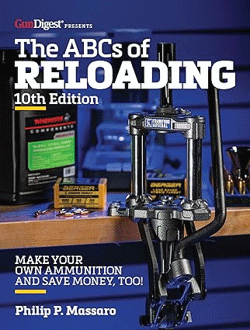
The purpose of this article is to familiarize the reader with the knowledge, basic tools and equipment you will need to start loading your own ammunition. It is up to the reader to learn how to reload. I suggest purchasing the The ABC’s of Reloading book on Amazon to learn how to reload.
To learn how to reload, I recommend finding an experienced friend who reloads and sitting with them to show you the ropes. This is your best option. Other resources are reading some books on the topic. You can join some social media groups like Facebook’s Reloading Bench group for advice. And of course there are more options like Youtube’s Ultimate Reloader or Bolt Action Reloading channels. Be sure to check out the manufacturers channels too. They offer great tip on how to use their equipment
Why Start Reloading?
For many seniors, reloading becomes much more than a way to make ammunition. It becomes an enjoyable workshop hobby that rewards patience and attention to detail. Whether you’re loading ammunition for target shooting, hunting, or simply to learn a new skill, understanding the essential reloading tools for beginners is the first step toward success.
The good news is you don’t need a room full of expensive equipment to begin. A solid foundation of quality tools, combined with safe loading practices and reliable load data, will take you a long way.
This guide explains each essential tool, what each one does, and why it belongs on your reloading bench.
Remember, When Reloading Safety Always Comes Before Equipment
What Do I Need To Start Reloading Ammunition Besides Reloading Equipment?
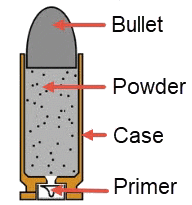
A complete round of ammunition is made from four basic components: the bullet, gunpowder or propellant, cartridge case, and primer. The bullet is the projectile that leaves the barrel when the firearm is fired. The cartridge case, usually made of brass, holds all the components together and is designed to fit the firearm’s chamber. One common terminology mistake is calling the entire cartridge a “bullet.” Technically, the bullet is only the projectile; the complete assembly is called a cartridge or round of ammunition.
Inside the cartridge case is gunpowder, more accurately called smokeless powder or propellant, which produces rapidly expanding gases when it burns. At the base of the cartridge is the primer, a small ignition component that starts the firing process when struck by the firearm’s firing pin. The primer ignites the propellant, the expanding gases build pressure inside the case, and that pressure drives the bullet down the barrel. Each component has a specific job, and all four must be compatible with the cartridge and firearm. For reloaders, component selection should always follow current, reputable published reloading data rather than substitutions or guesswork.
You can order these from several online sources or buy these at any outdoor or gun store. At the end of this post is a group of links you can help use
Essential Reloading Tools For Beginners: Reloading Manuals
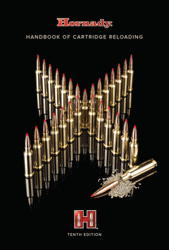
Before purchasing a single piece of equipment, buy at least one current reloading manual from a reputable publisher. Pretty much each bullet manufactures produces a reloading manual for their bullets. These books can cost a pretty penny. Now you can save money by only loading a specific brand of bullets. I know a guy who only loads Hornady bullets and the only manual he owns is the Hornady book. As for Me? I like to load all kinds of stuff, so I own several reloading manuals.
A quality loading manual teaches you:
- Safe loading procedures
- Powder charge recommendations
- Maximum pressure limits
- Cartridge dimensions
- Primer selection
- Bullet seating depth
- Troubleshooting techniques
As I load a variety of bullets, these are the manuals I recommend. Again, buy just what you need.
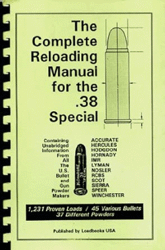
- Loadbooks USA – I absolutely love these load books. There are caliber specific, very affordable and will cover just about every manufactures bullets in that caliber. I have these books for the .9mm, .38 Special, .357 Magnum, .223 Remington and .308 Winchester.
- Hornady Reloading Manual
- Sierra 6th Edition Reloading Manual
- Speer Reloading Manual
- Lyman Cast Bullet Handbook 4Th Edition – This book is my newest manual. I just started shooting hard cast lead with my .357 Mag and, it is hard to find load data for basic lead and hard cast lead. This book is essential for these kinds of loads.
When you purchase a reload manual be sure to buy the latest edition. You can also find this data on the manufacturers website for free, but some like Hornady will charge you a subscription fee to access the data.
Never rely on guesswork or unverified internet load data. Published load manuals are developed using laboratory pressure testing and are your most important safety tool.
Essential Reloading Tools For Beginners: Reloading Data Logbook
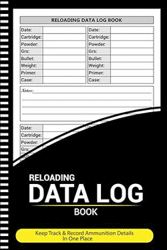
A reloading data log book is one of the most valuable tools a handloader can own. It allows you to record every detail of your loads, including the caliber, bullet weight, powder type and charge, primer, overall cartridge length (OAL), brass manufacturer, and range performance. By keeping accurate records, you can duplicate your most accurate loads, identify what works best in your firearms, and avoid repeating combinations that produced poor accuracy or inconsistent results.
Just as importantly, a reloading log book helps you stay organized and promotes safe, consistent handloading practices. Instead of relying on memory, you’ll have a permanent record of every load you develop, along with notes about velocity, group size, weather conditions, and any pressure signs you observed. Over time, your log book becomes a personalized reference guide that saves time, improves accuracy, and helps you produce reliable ammunition with confidence.
A well-organized reload data log book helps you produce consistent ammunition, identify the most accurate loads for each firearm, and safely monitor how different components perform over time.
Think of the reloading data logbook as a recipe book of sorts.
Here are the most useful items to track in your logbook:
- Basic Load Information
- Date loaded
- Cartridge caliber
- Manufacturer (Hornady, Winchester, Lapua, Starline, etc.)
- New or once-fired
- Number of times reloaded
- Bullet type (FMJ, HP, SP, Match, Cast, etc.)
- Bullet weight
- Bullet diameter
- Powder manufacturer
- Powder name
- Powder lot number
- Powder charge weight
- Starting load or worked-up load
- Primer manufacturer
- Primer type
- Primer size
Essential Reloading Tools For Beginners.
Okay, ready to get on with the equipment you need to start reloading?
Let me start off by saying I am a fan of Lee Precision Reloading gear. You will see a lot of Lee tech here, but I also own equipment from others as well.
Here are your major reloading equipment manufacturers:
- Lee Precision – easily the most affordable reloading presses
- Dillon – If you can afford Dillon, by all mean go with Dillon. They make really nice stuff, but its a bit out of my price range
- RCBS
- Hornady
- Lyman
Lets get it on!
Essential Reloading Tools For Beginners: Reloading Presses.
The Single Stage Press
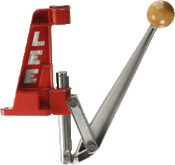
The best starting point for new reloaders. I own a Lee Precision single stage press. I use this to load my .308 rounds. A single stage might be slow, but if you are look to load precise ammo. If your wanting to shoot quarters at 100 yards, this is the way to go. I also use my single stage press to de-prime my Lake City brass before reaming out the primer pockets for commercial primers.You will find having a single stage press very handy.
Most beginner reloaders usually start with a single stage press.
A single stage press performs one operation at a time. Instead of producing completed cartridges with every pull of the handle, you perform one step on all your brass before moving to the next operation.
For example:
- Resize every case.
- Remove the spent primers.
- Prime each case.
- Charge each case with powder.
- Seat every bullet.
- Apply a crimp if needed.
Although slower, this method allows you to learn each part of the reloading process thoroughly.
Advantages
- Easy to learn
- Less expensive
- Excellent ammunition quality
- Easy to inspect every step
- Strong enough for large rifle cartridges
- Perfect for precision ammunition
Disadvantages
- Slower production
- Requires more handle pulls
- Less efficient for loading several hundred rounds
For most seniors and first-time reloaders, a single stage press is the best investment.
The Turret Press
A turret press is a reloading press with a rotating head, called a turret, that holds several reloading dies at the same time. Instead of removing one die and installing another after every step, you simply rotate the turret to bring the next die into position. Most turret presses hold three to seven dies, depending on the manufacturer and model.
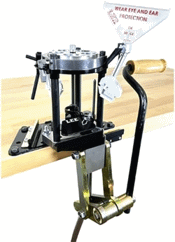
Many beginners use a turret press just like a single-stage press.
For example:
- Resize and deprime all your brass.
- Rotate the turret.
- Expand all the cases (if required).
- Prime every case.
- Add powder.
- Seat all bullets.
- Crimp all cartridges.
This method is slower but allows you to inspect every step carefully.
Advantages of a Turret Press
- Faster Than a Single-Stage Press
- Easy to Learn
- Dies Stay Properly Adjusted
- Changing calibers then takes only a few minutes.
- Lower Cost
- Flexible Operation
- Great for Multiple Calibers
Disadvantages
- Slower Than a Progressive Press
- Manual Case Handling
- Not Ideal for Very High Volume Reloading
- Auto-Index Systems Can Wear
- Fewer Automation Options

The Progressive Press
When Speed Becomes Important. If you are looking to load 400–1,000+ rounds/hour, then you need to buy a progressive press. I have 3 Lee Precision progressive presses. .9mm, .357 Magnum and .223 Remington.
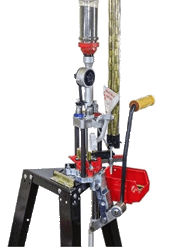
A progressive press performs several operations simultaneously. Each pull of the handle advances multiple cartridges through several stations.
For example:
- One case is resized.
- Another is primed.
- Another receives powder.
- Another has a bullet seated.
- Another is crimped.
After setup, each handle pull produces one completed cartridge.
Advantages
- High production rates
- Ideal for pistol ammunition
- Great for competitive shooters
- Saves time during large loading sessions
Disadvantages
- Higher cost
- More moving parts
- Longer setup time
- More complicated to operate
- Mistakes can affect several cartridges before they’re noticed
Let’s talk about buying a progressive press a minute. As a beginner I’ll assume you own one caliber firearm. In that case I would buy a progressive press in that caliber. It’s basically “ready to go”. Now I have 3 progressive presses. Sure, I could of bought a single progressive press, but to change calibers I would have to buy additional dies, shell plates and turrets for the dies and then have to change all of these out each time I wanted to change calibers. I figure the money save to do this wasn’t worth all that effort and trouble when buying another press meant just swapping out presses instead. It’s your call, it’s your money!
What Is The Difference Between A Turret Press And A Progressive Press?
A turret press and a progressive press both allow you to load ammunition faster than a single-stage press, but they work very differently. For someone new to reloading—especially a senior who values safety and learning—the differences are important.
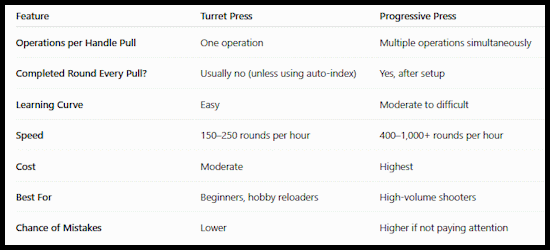
Many experienced reloaders eventually own either a single stage, turret press and a progressive press because each serves a different purpose.
11 Essential Retiree Gun Buyer’s Guide Tips.
Essential Reloading Tools For Beginners: Shell Plates for Progressive Presses
If you choose a progressive press, you’ll also need the proper shell plate. The shell plate holds the cartridge cases while they move from station to station. Different cartridge families require different shell plates because case head dimensions vary.
For example:
- .223 Remington
- .308 Winchester
- 9mm Luger
- .45 ACP
Each may require a different shell plate depending on the press manufacturer. Using the wrong shell plate can lead to:
- Feeding problems
- Poor alignment
- Damaged brass
- Priming issues
Always verify compatibility before ordering. Many manufacturers offer caliber conversion kits that contain everything needed for a caliber change. While this adds to the cost, it also makes caliber changes much faster and easier.
Essential Reloading Tools For Beginners: Powder Measure
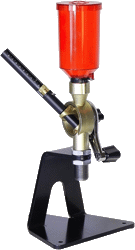
The powder measure is responsible for dispensing a consistent amount of smokeless powder into every cartridge case.
This is one of the most important tools on your bench.
Powder charges must remain consistent because:
- Too little powder can produce poor performance.
- Too much powder can create dangerously high pressures.
Quality powder measures provide repeatable charges while saving considerable time over measuring every charge individually.
Even with an excellent powder measure, many reloaders verify charges with a powder scale whenever changing powders or adjusting settings.
Essential Reloading Tools For Beginners: Priming Tool
Every cartridge requires a fresh primer before powder and bullet seating.
There are two common methods.
Press-Mounted Priming
Many presses include built-in priming systems.
Advantages include:
- Faster operation
- Fewer tools
- Convenient workflow
Hand Priming Tool
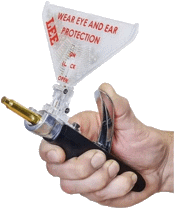
Many experienced reloaders prefer a separate hand priming tool.While having one is an option, its is essential to have one if your using a single stage press.
Advantages include:
- Better feel
- Greater seating consistency
- Comfortable operation
- Easier inspection
Properly seated primers are an important part of producing reliable ammunition.
Make sure you have to appropriate shell holders for your priming tool
Essential Reloading Tools For Beginners: Reloading Dies
Reloading dies perform nearly all the work of reshaping and assembling ammunition.
There are two basic reloading die types. One is carbide, the other steel.
The primary difference between steel and carbide reloading dies is that carbide dies (using a hardened tungsten carbide insert) do not require case lubrication for straight-walled pistol cartridges, saving significant time, whereas steel dies require lubrication to prevent damage. Carbide is harder, offers superior wear resistance, and is more expensive, whereas steel dies are more economical and sometimes preferred for avoiding “hourglass” case bulging
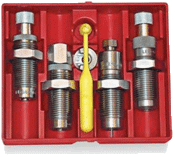
Every cartridge requires its own die set.
A typical rifle die set contains:
- Full-length sizing die
- Bullet seating die
- Neck sizing die
- Factory crimp die
Most handgun die sets include:
- Sizing die
- Expander die
- Seating die
- Crimp die
Quality dies can last decades when properly maintained.
Essential Reloading Tools For Beginners: Deburring and Chamfering Tool
Whenever brass cases are trimmed, the freshly cut mouth develops sharp edges. A deburring and chamfering tool removes these sharp edges.
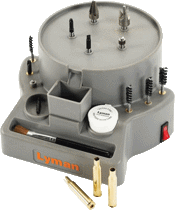
The Lyman Case Prep Xpress combines several brass preparation operations into one powered workstation. Instead of turning hand tools manually, powered attachments perform tasks much faster.
This tool is a life-saver I can promise you. I use is every time I have to prep cases before reloading. It is well worth the expense to buy this.
Typical stations include:
- Chamfering
- Deburring
- Primer pocket cleaning
- Military crimp removal
- Case neck brushing
This machine greatly reduces hand fatigue during larger brass preparation sessions.
For reloaders processing hundreds of rifle cases, it can become a favorite bench tool.
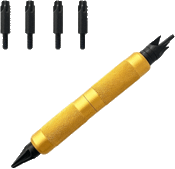
If you want to do this manually, then try a hand tool
This tool creates:
- Smooth case mouths
- Easier bullet seating
- Less jacket damage
- More consistent neck tension
It’s a small tool that makes a noticeable difference in ammunition quality.
Essential Reloading Tools For Beginners: Digital Calipers
A digital caliper like the Hornady Digital Caliper’s quickly becomes one of your most frequently used and IMPORTANT tools reloading.
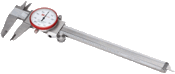
Calipers measure:
- Cartridge overall length (COAL)
- Case length
- Bullet diameter
- Neck diameter
- Rim thickness
Reloading depends on precision. This mean proper bullet seating dept and overall cartridge length.
Never estimate dimensions when you can measure them precisely.
Essential Reloading Tools For Beginners: Case Lube Kit
Bottle-neck rifle cartridges require lubrication before resizing.
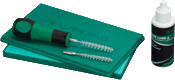
Without lubrication, brass cases may become permanently stuck inside the sizing die.
A typical case lube kit contains:
- Case lubricant
- Lubricating pad
- Neck brushes
- Cleaning cloth
Many reloaders now prefer spray lubes because they’re fast and provide even coverage.
Avoid using excessive lubricant, as it can dent the shoulder of bottleneck rifle cases during resizing.
Essential Reloading Tools For Beginners: Decapping Pins
The decapping pin removes the spent primer during resizing.
Although inexpensive, decapping pins occasionally break.
Common causes include:
- Military crimped primers
- Dirt inside cases
- Berdan-primed brass
- Misaligned cases
Keeping spare decapping pins on hand prevents interruptions during a loading session.
Essential Reloading Tools For Beginners: Shell Holders
Single stage presses use shell holders instead of shell plates.
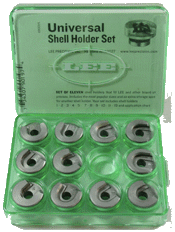
The shell holder grips the case head securely while the die performs its work.
Different cartridges require different shell holders.
Many manufacturers offer shell holder sets that cover dozens of common calibers.
Buying a complete set often saves money if you plan to reload several cartridges.
Essential Reloading Tools For Beginners: Case Trimmer
Fired brass gradually stretches with repeated firings. Eventually becoming too long and too thin.
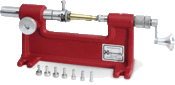
Stretched brass can become a serious reloading hazard because repeated firing and resizing gradually thin and lengthen the cartridge case. The most common problems are excessive case length, weakened case walls, and case-head separation. If a case grows too long, the case mouth can become pinched in the chamber, which may prevent the bullet from releasing normally and can raise chamber pressure. Thinning near the case head is even more concerning because the brass can eventually crack or separate during firing.
A case trimmer restores brass to the correct length. Most manuals list the:
- Maximum case length
- Recommended trim length
Checking case length with your calipers after every few firings is a good habit.

Essential Reloading Tools For Beginners: Lyman Flash Hole Uniformer
Inside every cartridge case is a flash hole connecting the primer pocket to the powder charge.
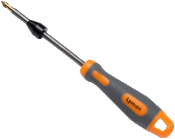
Manufacturing variations sometimes leave burrs or uneven openings. A Lyman Flash Hole Uniformer helps create a consistent flash hole diameter.
I use this tool after I have deprimed my brass. You will definately want one of these in your reloading tool kit.
Potential benefits include:
- More consistent ignition
- Better extreme spread
- Improved precision
- Uniform flame travel
While casual shooters may not notice dramatic improvements, precision rifle reloaders often include this step during brass preparation.
Essential Reloading Tools For Beginners: Impact Bullet Puller
No s**t Sherlock! Everyone makes mistakes at some point reloading. LOL
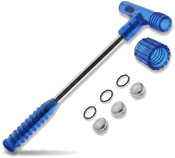
Aye, we all goof and your best tool to recover from this is a bullet puller like this Franklin Kinetic Bullet Puller.
- Perhaps you seated the wrong bullet.
- Maybe you forgot powder.
- Maybe the cartridge overall length isn’t correct.
Instead of throwing away components, an impact bullet puller allows you to safely disassemble loaded cartridges. The tool works much like a hollow plastic hammer.
After several firm strikes against a solid surface, inertia pulls the bullet from the case without damaging most components.
Every reloader eventually needs one.
Essential Reloading Tools For Beginners: Case Gauge
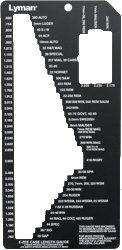
A case gauge quickly checks whether resized brass or loaded ammunition meets proper dimensions. Using a case gauge like this is much easier than using your calipers
Simply insert the case.
If it fits correctly, it’s likely ready for chambering.
Case gauges help identify:
- Improper resizing
- Excessive shoulder length
- Improper case trimming
- Bullet seating issues
They’re especially helpful when loading semi-automatic rifle ammunition.
Essential Reloading Tools For Beginners: Case Tumbler Kit and Polishing Media
Dirty brass can scratch expensive dies and make inspections difficult. Cleaning brass also improves the finished appearance of your ammunition.
A case tumbler kit is a useful addition to any reloading bench because it cleans dirt, powder residue, oxidation, and grime from fired cartridge cases before they are inspected and reloaded. Most beginner kits use a vibratory tumbler filled with dry polishing media such as crushed walnut shells or corn cob, although wet rotary tumblers are another popular option. Cleaning brass makes defects such as cracks, splits, and corrosion easier to spot and helps prevent dirt and debris from unnecessarily wearing your reloading dies.
A complete kit may include the tumbler, polishing media, media separator, and cleaning or polishing compound. While your brass doesn’t need to shine like new ammunition, starting with clean cases makes the reloading process cleaner, easier to inspect, and more enjoyable.
Vibratory Tumblers
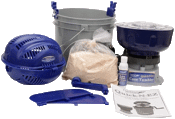
These use dry polishing media.
Popular choices include:
- Crushed walnut – my preferred media
- Corn cob
Cleaning additives can increase shine and reduce dust. I like to use a tablespoon of Nu Finish Liquid Polish in each load
Rotary Tumblers
These use:
- Water
- Stainless steel pins
- Cleaning solution
Rotary tumblers thoroughly clean:
- Inside the case
- Primer pockets
- Exterior surfaces
Although they require drying time, many reloaders appreciate the nearly factory-new appearance.
Should I Test My Ammunition Loads?
The short answer to this is YES! Testing helps verify that your reloads function reliably, cycle correctly in your firearm, and produce consistent accuracy. It also gives you confidence that your reloading process is repeatable.
When you are working up a load for your rifle or handgun, understand that each gun performs differently with varying loads. As a hunter, you want ammuntion that is accurate and performs well under a variety of conditions. Take the .223 Remington for example. Lets load up for the 55gr Hornady V-Max bullet. There are 15 different powders (Propellants) we can use ranging from 17.4 grains of powder to 28.1 grains depending on the powder type. I have 4 of the recommended gun powders on hand that I can load with.
I would pick a powder and load say 6-10 rounds each at the low, medium and high end of the recommended powder charges. And then do the same for the other three gun powders I have that I can use for that round. Then I would go to the range set my rifle up on a bench and then do a series of test shots, documenting each group to see which performs or shoots best in that rifle. Of the 12 test groups, the most accurate load group is the one I will use to load the rest of my ammo with from here on out.
Building a Practical Beginner Reloading Bench
You don’t have to purchase every tool at once.
A practical beginner’s setup might include:
- Single stage press
- Reloading manual
- Powder measure
- Powder scale
- Priming tool
- Die set
- Shell holder
- Case trimmer
- Chamfer and deburring tool
- Digital calipers
- Case lube kit
- Case tumbler
- Case gauge
- Loading block
- Safety glasses
As your skills grow, you can add specialized tools like the Lyman Case Prep Xpress, flash hole uniformer, and progressive press.
Common Beginner Mistakes
Learning from others can save both money and frustration.
- Buying too much equipment
- Start simple and upgrade only when your needs change.
- Forgetting brass preparation
- Clean, inspect, trim, chamfer, and deburr your cases before loading.
- Skipping measurements
- Use your calipers often. Small errors can create big problems.
- Ignoring case length
- Cases stretch after repeated firings.
- Trim them when necessary.
- Failing to inspect every case. Look for:
- Split necks
- Loose primer pockets
- Corrosion
- Case head damage
- Deep scratches
Discard questionable brass immediately.
Tips for Seniors Starting the Reloading Hobby
Many retirees find reloading to be both relaxing and mentally stimulating. Here are a few suggestions to make the experience even more enjoyable:
- Invest in good lighting. Bright LED bench lights make it easier to inspect brass and read measurements.
- Use a comfortable chair. You’ll likely spend extended periods at your reloading bench.
- Stay organized. Label powders, primers, bullets, and brass clearly to avoid confusion.
- Work in small batches. Processing 50 to 100 cases at a time helps maintain focus and reduces fatigue.
- Take breaks. If you become tired or distracted, stop and continue another day. Safe reloading requires your full attention.
- Keep a reloading notebook. Record your load data, component combinations, and range results. These notes become valuable references over time.
Developing good habits from the beginning will make reloading safer, more enjoyable, and more consistent.
Final Thoughts
Reloading is one of the most rewarding hobbies available to shooters. It combines craftsmanship, precision, and lifelong learning while giving you greater control over the ammunition you shoot. Whether you’re loading a few boxes of hunting cartridges each year or preparing hundreds of rounds for regular range trips to the range, having the essential reloading tools for beginners makes the process smoother, safer, and more enjoyable.
A quality single stage press, the proper dies, shell holder or shell plate, powder measure, priming tool, digital calipers, case trimmer, case lube kit, case gauge, and case tumbler kit will provide an excellent foundation. As your experience grows, advanced tools like the Lyman Case Prep Xpress, Lyman Flash Hole Uniformer, Impact Bullet Puller, and specialized caliber conversion accessories can help improve efficiency and consistency.
Remember that no tool is more important than patience. Follow published load data, inspect every component carefully, and never rush the process. With safe practices and the right equipment, you’ll enjoy a hobby that can provide years of satisfaction, continuous learning, and dependable ammunition tailored to your specific firearms.
Reloading isn’t just about making ammunition—it’s about developing skills, building confidence, and enjoying the pride that comes from producing quality cartridges with your own hands.
Reloading Resources
Case and Bullets
If your looking for bullets, case, powder and primers, check out these companies.
- Diamond K Brass – Great source for new and once-fired bulk cases
- MidwayUSA
- Sportsmans Warehouse
- Midsouth Shooters Supply
Powder Manufacturers
Want more practical, experience-backed articles like this? Subscribe to our newsletter today and get expert senior-focused tips, strategies, website updates, announcements and product recommendations delivered straight to your inbox.